
Witte
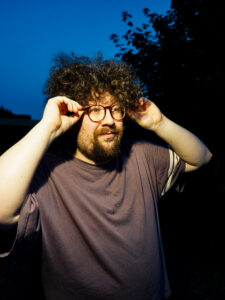
In this interview, Witte explore the emotional depth of “Glas und Steine,” their unique creative space, evolving sound, visual identity, and plans for bringing their music to the live stage.
1. “Glas und Steine” captures the feeling of watching a relationship slowly fall apart while still holding on to hope. What inspired the story behind the song, and what does the title mean to you?
In the song, you can hear the last thread that still holds two people together. One side is hoping that time will eventually take care of everything, and then, after a long silence, the other person suddenly gets back in touch. It brings up confusion, disappointment, a small spark of hope, and above all the question: “Why now, and not earlier? Why now, when everything was just about to be dead?”
One of the images I had in mind was the first line of the second verse: “105,148,000 seconds is a long time not to get in touch, you know that?” I liked the idea of someone counting every single second so precisely. On the one hand, it shows how much they have been longing for this person. But then that longing turns into something almost accusatory. The counting wasn’t just about hope anymore. It had also become bitterness.
I like it when people in songs are portrayed with several different facets. People are rarely just one thing. We can miss someone and be angry at them at the same time. We can still hope for something while already feeling disappointed. To me, that kind of contradiction is what makes a relationship feel real.
2. Witte was founded in your grandfather August Witte’s former electrical store, now the August-Witte-Haus. How does this unique place influence the atmosphere, songwriting and identity of the project?
We have several different rooms there, and we have given each of them its own atmosphere. In the studio, we work on some songs directly at the computer, usually under blue light, with everything feeling a little more modern. In the rehearsal room, there are only orange lamps, some of them with old lampshades. That is where we often write songs directly at the piano. And when it is warm enough, we carry everything outside onto the big terrace and play under the stars.
We often sit there afterwards and talk about the things that shaped us, especially our families. One of my grandfathers played accordion and harmonica, the other played trombone, and my great-grandfather played as well. Marvin used to be driven to every piano lesson by his grandfather.
So when we both had temporarily lost sight of music a few years ago, and then eventually sat there together and founded Witte, it felt like a circle was closing. There was also a sense of responsibility, that somehow we should carry something forward.
I hope they are proud of us. We are not international stars, and maybe we never will be. But I hope they are proud that we kept going and never completely gave up on music. For me, that is what this place represents. It is not just where we make music. It reminds us where we come from and why we are still doing this.
3. Your music combines melancholic synth textures, modern electronic production and intimate vocals. How do you, as producer and singer-songwriter, divide your creative roles when building a new song?
Marvin plays pretty much anything that has keys. He can spend hours diving into synth libraries and shaping sounds until he finds exactly what he is looking for. He also has an incredible ear. He teaches ear training and, among other things, helps young musicians who are preparing to apply to music colleges.
I have a strong feeling for song structures and the little things that make a song special. I tend to trust my instincts, and I often find myself singing one of Marv’s basslines back to him when I hear something in it that I want to develop further.
Marv and I understand each other extremely well, and we trust each other. We have one simple rule: if one of us has an idea, we try it. Then we listen to it together and decide what we think. There is no need to defend an idea just because it was yours. If it works, it stays. If it does not, we move on.
I have worked with many different musicians over the years, and that is something I really appreciate about working with Marv. There is a lot of trust, very little ego, and a genuine feeling that we are building the songs together.
4. Your debut EP “Ich war nur kurz draußen” explored memory, time and hindsight, while “Vögel” dealt with inner struggle and hope. How do you see “Glas und Steine” fitting into the emotional and artistic evolution of Witte?
I think the three releases represent different stages of finding out what Witte actually is.
“Ich war nur kurz draußen” was our way of feeling our way into the project. We were experimenting, finding our sound and figuring out which stories and emotions felt right for us to put into music. Looking back, it feels like a first step rather than a fully defined statement.
“Vögel” was much more immediate and personal. There was an emotional conflict behind that song that we both needed to get out of our heads and into the world. Making the song was partly a way of dealing with that conflict and letting it go.
“Glas und Steine” feels different to me. It probably comes closest to what we imagine Witte becoming in the future. The music, the production, the visual world and the way we tell a story all feel much more connected now. We are becoming more confident in leaving things open and allowing different emotions to exist at the same time.
I also think we are becoming less interested in simply telling people what a song is about. We would rather create a situation or a feeling and let the listener find their own way through it. “Glas und Steine” is probably the first song where I feel that this approach really represents Witte as a whole.
5. Witte has developed a very distinctive visual world built around muted colours, contrasts, late-night stillness, memory and longing. How important is the visual side of the project in communicating what the music cannot say on its own?
The visual world of Witte is not something we constructed. It is simply a reflection of who we are and how we make music. We like working in the evening, at night, and in an atmosphere that gives us room to disappear into the music for a while.
From the beginning, we decided that we did not want to bend ourselves into something we are not. We are not going to put on suits and smile into a camera just because that is what an artist is supposed to do. We do not want to make a party song just because it might be more successful, and we do not want to jump on every new hype.
Either people like us for who we are, or they don’t. And both are completely fine. I think I would actually find it harder to know that someone likes Witte only because we are wearing a mask.
For us, the visual side is therefore not really about explaining the music. It is about creating the same emotional space around it. The music, the images and the place where we make it all come from the same thing.
6. You are currently developing your first live set while also creating digital live sessions and TikTok content. What can listeners expect from Witte in the coming months, and what would you like the project to become as it continues to grow?
We are only two people, but you hear several instruments and voices in our songs. Even so, we consider ourselves a live band. We love playing our songs, although so far we have mostly been doing it without an audience. That is definitely something we want to change. We are currently working on our live set, experimenting and figuring out how to translate what we create in the studio into a live situation.
There will be at least two more singles before the end of the year, and for now we will probably continue releasing music as singles. If we ever make an album, it will definitely be a concept album. Simply putting a number of songs next to each other does not make much sense to us. If an album has nothing to say as a whole, we would rather release the songs individually.
More than anything, we want to follow what we actually feel like doing. Our TikTok account is probably a good example of that. We don’t want to feed the algorithm by dancing, making fools of ourselves or posting the same thing ten times just because we are told that this is how you grow. We have a small live setup in our rehearsal room, and when we feel like going live during a band rehearsal, we just go live. We play whatever people ask us to play.
So far, nobody has actually requested a Witte song. Once, we simply put one in between the songs because we felt like playing it. And that is probably a good description of where we are right now. We want Witte to grow, but we don’t want to lose the reason why we started it in the first place.
We don’t really know yet how far Witte will go. But we know that we want to find out without pretending to be something we are not.