
Roxy Rawson
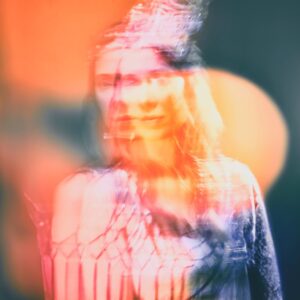
Singer-songwriter Roxy Rawson shares the story behind her evocative single “South Sudan,” exploring compassion, resilience, personal transformation, and how the track connects to her forthcoming album, Bright Star.
1. South Sudan is inspired by your experiences working in Sudan around 2010–2011. What moments or encounters from that time stayed with you most strongly and ultimately found their way into the song?
There were so many sensory experiences that made a deep impact on me, such as the whole office stopping work to adhere to the call to prayer…attending a Sufi gathering at Sunset, seeing the point in Khartoum where the two Nile rivers meet, but most of all, the people I met made a big impact on me. As part of my work there at the time, we consulted with local communities about what they needed. People were so ready to pool resources and mobilise to help each other and their communities. This stood in stark contrast to the way the dictatorship at the time extracted Sudan’s resources for themselves, enriched themselves and did not care for Sudan’s population. If I remember correctly, there was only one medical centre serving a geographical area roughly the size of South East England. As a result, the maternal mortality rate was comparable to that of the UK in the early twentieth century.
This song speaks to the depth of people’s care for each other and other, which is often invisible. Governments’ violent actions are much louder than the quiet daily commitment people have towards caring for each other and their communities.
2. You’ve described the track as being “about the opposite of dictatorship.” Can you expand on that idea and explain how themes of compassion, community, and care became the foundation of the song?
In every given moment, each human being makes the choice with their free will to care or to harm others and themselves with their words and actions. And it’s the choice to care, that enables humanity to survive and thrive. If parents didn’t care for their children, if adults didn’t care for each other, if different generations within communities weren’t taken care of, the world would be a totally harsh place.
Yes, violence persists. Dictatorship, narcissism and control govern much of politics. But there is this whole other level of existence, much quieter, that is enabling humanity to go on, for people to thrive and live. And it is woven through local communities in many places on the earth, that quietly do this vital work on the earth, add goodness to the earth and encode light into the collective consciousness.
3. The song blends symbolism with vivid imagery, portraying the land as something ancient, feminine, and alive. How did you approach translating these complex ideas into lyrics and music?
When I write, I enter a state of flow, so I didn’t write this song with my cognitive mind. I guess I must have had that intention to somehow bring those elements together while I was writing it, but it was actually very instinctive in how it came together. Usually when I write, it comes from a kind of inner necessity; an awareness that I have arrived at that is calling for expression and the song that results, is like a description of this already formed idea that asked for expression. When I write the lyrics or music to any song when I’m in this state of necessity and flow, I feel all the lyrics as if I am embodying them, it’s a full experience. So I think I was giving voice to what I was embodying at the time I wrote it.
4. Musically, South Sudan feels both intimate and cinematic, combining live strings, subtle electronics, and your distinctive vocal style. What was the creative process like working with Jherek Bischoff to bring this soundscape to life?
It was wonderful working with Jherek, because he instinctively understood the meaning in the songs and what they were asking for musically. I felt like he was able to listen and understand, and respond musically in a way that augmented further what the song wanted to communicate. He was able to sense when moments required intimacy and the moments that would respond well to broader orchestration. I remember feeling very inspired and excited during listening sessions with me after he’d worked on things. He was so respectful about checking in with me to ensure his arrangements felt like they were going in a direction I enjoyed.
5. After navigating a decade of chronic illness and personal transformation, has your relationship with songwriting changed? In what ways does South Sudan reflect the person and artist you are today?
I guess after going through more intense experiences in life and the learning that comes from those portals, I imagine that my songwriting contains a different level of emotional processing as this is the case in my personal life. I’ve done a great deal of inner work to transmute pain and to uphold my spiritual worth in the face of intense health challenges, that seemed like they would hinder my whole life and I’d never recover from them. I’ve known a depth of physical pain that God willing most people will come to know in old age rather than mid life. But I am grateful for what I learnt from that experience. It has given me a new appreciation of health and youth. The ability to move, read, walk, do very simple things. I came to life again almost like a child in my late thirties. And I didn’t even know if I would ever recover, so it was such a gift.
6. Your forthcoming album Bright Star is described as a work rooted in transformation, resilience, and renewal. How does South Sudan fit into the wider story of the album, and what can listeners expect from the journey ahead?
The last years have been a time of intense personal change. After getting through my health challenges, there was so much joy to encounter again after my recovery. It also led to some big life decisions, leaving Mormonism and my marriage— and while those were intense experiences at the time, they were also a sign of growth and self respect. This album doesn’t turn away from the darkness of life, but it holds space for the joy as well. I remember Nick Cave in his lectures on the love song, talked about the concept of ‘Duende’. From his understanding, a kind of worldly awareness of sorrow, without negating joy. The breadth of life includes both joy and sorrow. We are in an experience of duality and it’s that contrast that gives meaning and richness to all the highs of experience. It obviously feels better to be in a state of joy, but joy is deeper, sweeter and more informed after it has been birthed in the forging fire of pain and sorrow.