
Giulio Risi
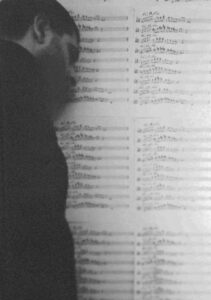
In this interview, pianist and composer Giulio Risi discusses his evocative reinterpretation of Ennio Morricone’s Playing Love, exploring the power of silence, emotional expression, and his evolving artistic vision.
1. Your reworking of Playing Love arrives on the sixth anniversary of Ennio Morricone’s passing. What inspired you to revisit this particular composition, and why did this moment feel significant for sharing your interpretation?
Playing Love has always held a special place in my heart. Releasing my rework on the sixth anniversary of Morricone’s passing felt like a quiet and personal way to remember him. This arrangement was never about adding something to his music, but about listening more deeply to what was already there. In many ways, it is a tribute to the beauty of silence, one of the Maestro’s greatest lessons.
2. In your notes about the piece, you describe silence as “architecture”. How did this philosophy guide your arrangement process, and what challenges did you face in balancing sound and stillness?
Silence in music is never empty space. It is a structural element.
In Morricone’s writing, rests often carry the emotional weight of the entire piece (think of the opening of Deborah’s Theme, for instance).
In this rework, my main goal was to shift the spotlight onto those hidden structures.The greatest challenge was restraint, stripping everything down to its essence and making sure that when the instruments stopped playing, the music never stopped breathing. I wanted to build the piece around those silences.
3. The dialogue between piano and cello is at the heart of this recording. What drew you to this instrumental pairing, and how did you approach creating an emotional conversation between the two voices?
The piano and the cello share a timeless synergy. They felt like the most natural choice for this piece because they can speak with different voices while inhabiting the same emotional space. For this recording, I imagined them as the two lovers portrayed in The Legend of 1900. I wanted their dialogue to feel intimate, almost physical. I treated the two instruments as a shared breath, expressing a longing suspended between tension and stillness.
4. Morricone’s music is often praised for its unforgettable melodies. In focusing on pauses, breathing, and tension, did you discover new layers of meaning within Playing Love that you hadn’t fully appreciated before?
Absolutely. When you approach a universally beloved melody like “Playing Love” you get to fully appreciate the emotional weight it carries. In the film, the protagonist, 1900, catches sight of a young woman through the window of the ship. The melody captures that moment of wonder, and seems to be enhancing the birth of a love, although I felt that music in that point doesn’t just tell a story of two people meeting, it tells a story of what it is versus what it could be, the space between a glance and a touch. At the end of the day, in every love story silence is paramount, and the piano and cello dance I wrote hopefully translate that unspoken intimacy into sound.
5. Your work often blends contemporary classical influences with elements from other musical traditions. How has your journey through jazz, gospel, pop, and progressive music shaped the way you approach neoclassical reinterpretations like this one?
My journey through these musical worlds has me that music is a language of emotion and storytelling. My background in jazz taught me the value of interplay, of listening to the musicians and embracing the unexpected. Gospel taught me that music can be a form of meditation. Progressive Rock encouraged me to think beyond conventional structures. All of these influences naturally find their way into my work whenever I compose or reinterpret music within a contemporary classical language.
6. Listeners who enjoy artists such as Max Richter, Nils Frahm, Joep Beving, and Ludovico Einaudi may find a connection with this release. Looking ahead, how do you see your own artistic voice continuing to evolve while maintaining the emotional intimacy that defines your music?
Looking ahead, I see my artistic voice evolving through an even deeper exploration of texture and sonic space, perhaps incorporating subtle electronic elements or unusual acoustic pairings. However my core philosophy will remain the same.
My goal has never been to follow a particular aesthetic, but to keep refining my own voice. If listeners can find a genuine emotional connection in my music, then I know I am moving in the right direction. Ultimately, what I seek is to create a suspended atmosphere, an open space where listeners are free to project their own memories, emotions, stories.