
Otto Orany
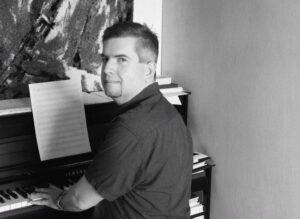
Blending jazz, contemporary classical music, and imaginative storytelling, Otto Orany invites listeners into “10 Blue-Penciled Stories”, an album of ten unique musical worlds. We discussed its inspirations, creative process, and artistic vision.
1. “10 Blue-Penciled Stories” is described as ten distinct musical worlds, each with its own rules and identity. What inspired you to structure the album this way, and how did you ensure that each piece maintained its individuality?
The structure is a fluid arch with increasing energy, with its exact climax at “Gloria In Excelsis Neo.” The structure, like many things in my life, occurs intuitively. (I usually receive an idea late at night, while falling asleep, which I then develop the next day.)
The individuality comes from humbly observing the needs of each different style.
2. The album brings together an unusual ensemble featuring woodwinds, harpsichord, keyboards, bass, and drums. What attracted you to this combination of instruments, and what unique possibilities did it open up for your compositions?
Drums are the stable rhythm of life. Bass is water flowing toward the richness of life. Keyboards are the textures of life, and woodwinds are more subtle, sky-like textures.
3. Track titles such as “Tiptoe Elephant,” “Running Unicorn,” and “Temple of Friendship” evoke vivid imagery and a sense of playful imagination. How do these titles connect to the music itself, and what role does storytelling play in your creative process?
Storytelling is key to my work. I imagine every musician as an important member of my musical family.
4. Your work often explores the intersection of contemporary classical music, jazz, and electronics. How did those influences shape “10 Blue-Penciled Stories”, and were there any new musical directions you wanted to explore on this record?
For me, the basis is jazz — it’s my root, and it gives me the freedom to extend the branches into every other thinkable style.
5. The singles “Lions Eat First” and “Trapped in Rap” seem to represent very different moods and ideas. Why did you choose these tracks as the album’s lead singles, and what do they reveal about the broader themes of the record?
We all need energy — energy to fight our hidden fears.
6. Looking back on the creation of “10 Blue-Penciled Stories”, what was the most rewarding challenge you faced, and what do you hope listeners will take away after experiencing all ten stories from beginning to end?
The most rewarding part was the wholeness of this project. I was genuinely afraid I wouldn’t be able to smoothly blend so many different styles, from avant-garde to broadly accessible film music.