
Pocket Lint
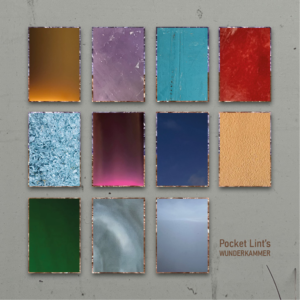
Pocket Lint’s Wunderkammer is a fascinating sonic cabinet of curiosities, blending history, art, and personal storytelling. We spoke with Mark Heffernan about inspiration, creativity, and the album’s imaginative world.
1. The concept of *Wunderkammer* or a Cabinet of Curiosities is central to the album. What inspired you to build an entire record around this idea, and how did it shape your songwriting process?
I think there were a couple of central reasons. One was that I have always been interested in them. We are lucky in East London that we have ‘The Viktor Wynd Museum of Curiosities, Fine Art & Natural History’ a modern day Wunderkammer in a building that used to be a call centre, a serious upgrade for culture in the area. But I think as someone who studied History, I find the idea of a Wunderkammer as opposed to a museum to be such an interesting thing. There is no great claim to importance and as such it becomes a brilliant mirror or portrait of the curator. It became clear early on in this album that that is what I was building and that is one of the reasons I sought out a co-producer for the album as I knew I was going to be painting a self portrait in sound.
2. You describe Pocket Lint as a way of “painting in sound.” How do you approach translating images, objects, and emotions into musical compositions?
There are a few different ways I do this. Firstly, I will have an idea of the atmosphere I want the song to have and that will begin to dictate sound palette and the types of instruments I will lean towards. V little of my music is written outside of the studio. I don’t strum a guitar and write a song, sound selections and experiments are the starting point for most. The album opener From an Ancient Land, I wanted an arid, desert feel, akin to the feeling I get from Ozymandias by Shelley and so the guitars were made to create that, with quite a dry brittle sort of sound and it obviously will influence the choice of scales and chords I will use. The simple synth Taiko drums again are part of it and I used three different pitched feedbacks that were played live to create that murky hazy feel. I wanted it to feel like the beginning of a strange journey.
3. Each song on the album represents an exhibit within your personal collection of curiosities. Could you tell us about one particular object or story that became especially meaningful during the creation of the record?
I suppose the obvious one to go for here is Clockwork Boy as it is very autobiographical. This song is connected to fulfilling others’ expectations of you and how there can be a real cognitive dissonance between the real you and the public face and the struggles of getting older and still trying to fulfil a certain expectation of yourself. That need to push yourself on, but the internal questioning of why and whether that is what you really want. I think we all have that at various points and so for me, I am the Clockwork Boy, but I suspect a lot of people will find something of themselves in the song. It was deliberately written to be a big glam rock ballad in the vein of Bowie or Steve Harley as for many of my older friends, that is who they see me as. A glammed up, made up dandy, prancing through clubs with a drink in each hand and to an extent, that is still how I see myself, but inevitably, the reality is something different.
4. Your music blends synths, guitars, vintage drum machines, found sounds, and vocals. How do these diverse elements help create the atmosphere and narrative world of Pocket Lint?
I think in a sense, firstly, I am incredibly lucky to have access to all of these instruments that I have collected and so that is a key part of my sound. I love working with real hardware but appreciate how fortunate I am to be able to do so. I have never been someone who only wanted the most famous synths or guitars, I have always loved Eno’s line on ‘making the rubbish gear you have part of your unique sound’ and I think that those quirks is a key part of Pocket Lint. I love found sounds for the same reason, they are linked to a place or an event, so Butterfly Collection has field recordings made on my phone of the noises of the insects early morning in Tuscany. I love to use things like that that are intensely personal and unique as part of my process and again, learning a new synth or drum machine is often a key part of a song. The learning as a means of creation maxim.
5. You mentioned being influenced by Romantic poets such as Shelley and Coleridge while writing the album’s opening piece. In what ways did literature and poetry influence the mood and storytelling throughout the album?
I have always been someone who needed input to create output and when I was younger that was probably more based on novels. With Pocket Lint it has been more about images and so a lot has come from art or film, but poems too create images, often not a full narrative and I think by selecting and curating a micro gallery of scenes for yourself, you can begin to create a mood that you can use to write the music. So for me, all of the arts are things that I can draw from to create music and lyrics. My last album was a piece of sophisticated modern age pop, inspired by the Bauhaus and the Jet Age. For this, I wanted a much darker, weirder more opium fuelled feeling and so it was natural that I reached for the romantics to help create the mood and write the lyrics. ‘Nyx?’ uses the idea of a Greek Statuette and obviously Keats got there first with his Ode, which also uses a lot of questions as does the first verse in ‘Nyx?’ and even the title
6. From teaching yourself cameo carving during lockdown to creating this deeply imaginative musical journey, what have you discovered about yourself as an artist through the evolution of Pocket Lint?
I think for a lot of people the process of making something, and I would label what I do as art, is just one long voyage of discovery and I suppose to an extent, this album marks 5 years of Pocket Lint as a more serious musical project after a long period of musical inactivity and so it serves as a chance for reflection. What I have learnt is that I have to constantly change and evolve to remain focused and interested. That I am more able when older to take greater pleasure in other’s successes and not view it as a personal slight. I think Bowie said something about getting older being learning the person you were always meant to be and whilst I am by no means old, I like to think I am on the journey to being the person I am supposed to be both musically and as a person.