
OpCritical
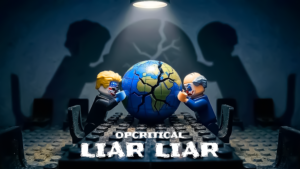
OpCritical returns with Liar Liar, a fierce punk-rock anthem challenging oligarchic power and social inequality. In this interview, the band discusses activism, creativity, democracy, and music’s role in change.
1. “Liar Liar” delivers a powerful critique of oligarchs and their influence on society. What inspired you to tackle this topic, and why did you feel now was the right time to release this song?
Many entrepreneurs start with good intentions, but then the money and power corrupt them, and they forget about the people whom they exploited. There are many examples in modern society. The rich keep getting richer, and the rest of us suffer. We have oligarchs running countries all over the world, and the people are oppressed. So, we wrote Liar Liart to focus attention on this. Citizens need to understand that they have the power to change this inequality.
2. The song combines energetic punk-rock intensity with a strong political message. How do you approach balancing activism and entertainment in your music without losing the impact of either?
We are professional musicians with our fingers on the anxieties of society. We understand in this day of sensory overload that to break through, we need to have good material with a fresh sound, and great, creative visuals. This is what motivates us. Many people, since COVID, have been in a psychological holding pattern of paralysis and depression. We want to restore hope and happiness, but first, we have to change the unfair advantage of oligarchs.
3. The music video uses LEGO characters to symbolize both power structures and their fragility. What inspired that creative choice, and what message were you hoping viewers would take away from those visual metaphors?
The use of LEGOS was intentional for several reasons: first, LEGOS can be easily built, but they can also easily be torn down because they are made of plastic and have no glue. This is what we want to portray — oligarchs build castles made of sand, but people can wash them away. Second, LEGOS allowed us to quickly create powerful visuals that stick with the viewers.
4. One of the song’s most memorable lines is, “Liar Liar world’s on fire.” Can you talk about the meaning behind this refrain and how it reflects the themes of the track?
When we were kids, and a person lied, we would all sing, “Liar Liar, pants on fire” to call him or her out. This was very effective and usually stopped the person from doing it again. In our song, the world is literally and figuratively on fire with unjust wars in Ukraine and Iran, and the dismantling of constitutional safeguards in America and abroad. So these words are powerful and create a lasting impression on the listener.
5. OpCritical emphasizes peaceful protest and civic action as solutions to the problems highlighted in your music. What role do you believe artists can play in encouraging positive social and political engagement?
We do not believe in violence except in cases of defense. But we are huge believers in political action, protests, and other forms of peaceful, persuasive engagement. We want to bring back the power that music played in the 1960s, which helped end the Vietnam War and paved the way for the Civil Rights Movement. Too many artists now are afraid or content, despite society’s powerful thirst for music to rally them.
6. “Liar Liar” is part of a broader series of releases addressing plutocracy, kleptocracy, and other societal challenges. What can listeners expect from OpCritical’s upcoming music, and what conversations do you hope to inspire through your work?
We have recorded several dozen songs about the state of America and even other parts of the world. We are planning to release a new one every week or two for the rest of the year. No artist on earth has ever attempted such an ambitious and audacious project, yet the times and the dangers require it. We hope to motivate people to get off the couch to protect this precious experiment we call democracy. Humanity must progress, yet we have seen regression recently. We want to usher in a new Age of Enlightenment where the goal of governments is the happiness of the people, and where art, music, and creativity play a very leading role.