
Neo Brightwell
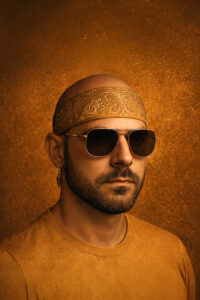
Blending heartbreak, rhythm, and queer spirituality, Neo Brightwell crafts a sound where movement becomes healing—this interview dives into Moonshine Disco, intimacy, and turning survival into something defiantly alive.
1. “Break Me Like a Promise” transforms heartbreak into something almost kinetic and communal—what drew you to express emotional rupture through rhythm and movement rather than stillness or silence?
Stillness has its place, but I think movement is how a lot of people actually survive. Most heartbreak songs end at the wound. I was more interested in what the body does afterward. The body keeps moving before the mind agrees to.
There’s something deeply human about dancing while devastated. Queer communities especially have turned dancefloors into places where grief and joy refuse to cancel each other out. So rhythm, for me, isn’t escapism. It’s evidence of life continuing under pressure.
“Break Me Like a Promise” came from wanting to write a heartbreak song that doesn’t collapse into aestheticized sadness. I wanted the pulse to carry the listener forward, even while the lyrics admit something is ending. Everyone in the room has lost something. Rhythm lets strangers survive beside each other for three and a half minutes without explaining themselves first.
That’s Moonshine Disco to me: movement holding truths language alone can’t carry.
2. You describe your voice as part sermon, part spell, part late-night voicemail. How do these different modes of expression shape your songwriting process, especially when dealing with something as raw as honesty in love?
I think all three forms are attempts to cross distance.
A sermon says: I need you to stay with me long enough to understand this.
A spell says: language can alter reality if spoken correctly.
A voicemail says: I didn’t know where else to put this.
Most of my songs live somewhere between those impulses.
The sermon side is cadence and breath. The spell side is repetition, image systems, recurrence, and memory. The voicemail side is vulnerability without polish.
Especially in love songs, I try to protect the human shakiness. I don’t want the voice to sound invincible. I want it to sound lived in.
3. The phrase “Moonshine Disco” is striking and unconventional—how did this sound and identity emerge, and what does it allow you to explore that more traditional genres might not?
Moonshine Disco started because none of the existing genre labels were large enough for the emotional architecture I was trying to build.
Country understood inheritance, land, ghosts, and survival.
Disco understood the body, release, and collective ecstasy.
Gospel understood transcendence.
Poetry understood compression and silence.
But I didn’t want to visit those traditions separately. I wanted them speaking to each other in the same room.
The “moonshine” part carries outlaw energy, hidden fire, Americana, and survival improvisation. The “disco” part carries liberation through movement, queer joy, sweat, glamour, and collective release. Together, the genre becomes a conversation between grit and radiance, the church and the dancefloor.
More than anything, it gave me permission to stop fragmenting myself artistically.
4. Burn Bright, Stay Free seems to center on lived emotional experience rather than abstract storytelling. Did you approach this album differently in terms of writing or production compared to your earlier, more mythic or political work?
Absolutely.
Earlier records often looked outward: systems, survival, collective witness, mythology, erasure, public pressure. Even when personal, they tended to scale upward toward symbol.
Burn Bright, Stay Free turns the lens closer to the skin.
I became interested in embodiment, intimacy, domestic textures, and the emotional physics of ordinary life. A hand on a kitchen counter can carry as much weight as a manifesto if you write it honestly enough.
So the writing became less declarative and more inhabited. I stopped trying to elevate every moment into myth and started trusting smaller details to hold meaning on their own. That changed the music too. The production breathes more. There’s more space inside the arrangements. Less proving. More presence.
Ironically, I think that intimacy made the album feel larger emotionally.
5. There’s a strong thread of queer spirituality and survival running through your music. How has your personal journey influenced the way you merge themes of faith, identity, and desire in your work?
I grew up around systems that often treated identity and spirit as oppositional forces. A lot of queer people inherit the feeling that they must amputate some essential part of themselves in order to be loved, safe, or holy.
My work rejects that division completely.
I don’t experience desire as the opposite of spirituality. I think desire can be deeply revealing. Sometimes the body tells the truth long before language catches up. Sometimes survival itself becomes sacred.
A lot of my songs are trying to reclaim symbolic space that queer people were historically denied access to: altars, hymns, ritual, transcendence, reverence. Not to imitate old systems exactly, but to rebuild meaning from the ruins in a more human form.
Sometimes dancing is theology. Sometimes tenderness is resistance. Sometimes simply remaining visible is a spiritual act.
6. Your music feels designed not just to be heard, but physically felt—almost like a shared ritual on the dancefloor. What do you hope listeners carry with them after experiencing this album, both emotionally and physically?
Relief, first.
Not escapist relief. Recognition.
I want people to feel less alone inside themselves.
A lot of modern life pressures people into fragmentation: public self, private self, performed self, surviving self. I think music can briefly reunify those pieces. A really great song lets somebody inhabit themselves more fully for a moment.
Physically, I want the records to move through the body. I care about pulse, bass, breath, repetition, the feeling of a room exhaling together.
Emotionally, I hope the album leaves behind a strange combination of tenderness and stamina.
Not the fantasy that pain disappears.
Not the performance of being healed.
Something more durable than that.
The sense that a person can remain open without disappearing. That joy does not make you naive. That softness is not surrender.
And maybe most importantly: survival is not the end of the story.
Sometimes it’s where the real life finally begins.