
The Music Of Sound
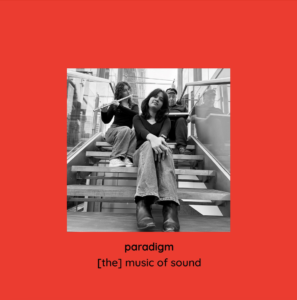
Blending dream pop atmospheres with classical influences and multicultural perspectives, The Music Of Sound discuss their creative evolution, the meaning behind “Paradigm,” and the chemistry shaping their distinctive sound.
1. Your band brings together different generations and backgrounds—how does this unique dynamic influence your creative process and the chemistry behind your sound?
NEIL: That’s a really interesting question. For me as the principal writer, I think it does make a significant difference. Firstly, I have consciously changed the sound and style of my songwriting to suit Sherin’s very pure, dreamy voice and Elena’s amazing flute playing with her trademark slow vibrato and clever use of dynamics. Also, because Sherin and I are involved in activities outside the band that are also focused on new music (like Fresh on the Net, Trust The Doc etc.), it is inevitable that we are going to respond to what is happening in music now but then also mix that with influences from the past which, in my case, means a very wide spectrum of music and epochs. By contrast, Sherin being so young and having grown up in such a different culture means almost all of it is new to her but then she can bring South Indian influences that are new to Elena and I. Elena and I are both from classical backgrounds too. All these things feed into our work.
SHERIN: I think our differences actually make things feel more real and exciting. We all come from such different places, so everyone hears music in their own way. For me, I mostly go by feeling how the song connects emotionally and how I can bring that out through my voice. I think we just really listen to each other. There’s a lot of respect, and no one is trying to force a sound. It all comes together quite naturally, and that’s what makes it work.
ELENA: Each of us having our own unique style and background is something that I believe sets us apart from other groups. Rather than just having the exact same stylistic features, we’re able to combine our influences to create our distinctive sound. Often at our gigs, me and Sherin are complimented on how my flute and her voice blend together but to be completely honest that cohesion is something that we haven’t really worked on. Our chemistry and tonal harmony is just a natural sound that we both create.
2. Sherin, your journey from South India to London is incredibly powerful—how has that personal experience shaped your voice, lyrics, and artistic identity?
SHERIN: Growing up in South India, the way I listened to music was very different to now. I was mostly surrounded by Tamil and Indian music, so I naturally connected more to melody and emotion rather than analysing songs deeply. I didn’t really think about genres. I just listened to what felt good. Moving to London changed that a lot. I got exposed to so many different styles and sounds that I hadn’t really explored before. It made me more open and curious as a listener, and that’s definitely shaped how I sing now. I pay more attention now to how my voice fits into the song, instead of just singing along with it. Since I’m not the one writing the songs, my role is more about feeling and interpreting what Neil creates. I try to bring my own touch through my voice; keeping that emotional connection I’ve always had, but now with a wider range of influences behind it.
3. Neil, having founded the project years before the current lineup, how has the band’s evolution into an electro dream pop act changed your vision as a composer?
NEIL: Well, the band started because I had been invited to perform as a solo artist on the BBC Introducing Stage at Latitude in 2017 and I wanted to do it as a band. At the time, I was composing contemporary classical music that used a lot of pre-recorded sound, not for sound effects like other people, but to create actual harmony from everyday sounds if I could derive a pitch from them so that the sounds of my environment became musical instruments playing alongside conventional ones. The original band was called Neil March & The Music Of Sound, a reference to that use of sound but also a pun on ‘The Sound Of Music’. We had flute, piano, cello, synth and electronics (i.e. the pre-recorded environmental sounds) and I conducted the band as a quintet playing the music because there were a lot of complex changes of time signature, tempo and rhythm which I needed to direct. Max Reinhardt, on Late Junction on BBC Radio 3, talked about how my music blended ‘avant-garde tendencies with pop sensibilities’. I loved that and had it as a quote on the website for a long time. Over the past couple of years, the sound has changed beyond recognition though.
Even before Sherin joined the band, we had begun to move away from being so classical and more towards a Dream Pop and Synthwave influence and Florie had started singing as well as playing piano. Elena had already joined us by that time so she was also having an impact on what I could write for the flute. Then, when Florie left after having her second child and Sherin stepped in, it represented the perfect moment to take another step away from the old sound and towards a more pop-influenced style. Athough we are heavily influenced by Cocteau Twins, it isn’t obvious to others because there are no guitars. We take inspiration from a huge variety of sources that even we can’t always pinpoint but which may also include Beach House, Chromatics, Donna Summer, Julee Cruise, Keane, maybe a little of Khruangbin, Chvrches, Sun’s Signature, lots of flavours, even a bit of Abba about our harmonies! I definitely feel what we are doing now is more exciting to be part of than anything we have done previously.
4. Elena, the flute adds a distinctive layer to your music—how do you approach integrating it into a genre that doesn’t traditionally feature it?
ELENA: I personally believe that all instruments have their own place in every genre; it’s just the individual artist’s job to find where it fits. In our music, I often look for a balance in my sound with the rest of the band. As the flute has such a distinctive tone, I like to lean into that sound, however it’s also important to ensure that it still blends with the vocals and piano. For instance during a solo, I allow myself to have a stronger sound (using more vibrato, letting the notes sing out), but when I am harmonising with the vocals, I typically match their sound and vibrato, to create the feeling that I am another voice.
5. Your new single “Paradigm” explores political and emotional chaos—what message or feeling were you hoping listeners would take away from it?
NEIL: We want to highlight the impression, fuelled by certain elements in social and mainstream media, of a prevailing view in the UK and, to a degree, elsewhere too that supports a nasty narrow-minded racist, xenophobic and bigoted outlook that is all about scapegoating and using lies and fake news to justify ideas. But there is plenty of evidence that those people don’t represent the majority, as seen in the way the Greens have performed in recent by-elections for example, and we want to deconstruct and discredit the racists’ arguments and present a much more positive, inclusive and futuristic vision. That’s why the chorus says ‘Analyse, Visualize, Recognise this Paradigm/In my heart, Make a start, Take apart this Paradigm’. In other words, break open the box, see things for how they really are. Separate the truth from the prejudice and fight back against all the hate and nastiness. There’s also a line going into the second chorus that says ‘Even though I long for harmony/We’re at war and love’s our military’. We want to wage a war through love on all the haters!
SHERIN: For me, when I sing “Paradigm,” it’s less about explaining the politics and more about the feeling behind it. There’s a lot of tension in the song, but also a sense of hope running through it. It’s about stepping back, thinking for yourself, and not getting lost in all the noise. As a singer, I connect more to the emotional side of it. Even with everything that’s going on, there’s still this message of staying human, staying kind, and not losing that sense of empathy.
ELENA: For myself, I see ‘Paradigm’ as a message for hope in a time where a lot of hate is being spread throughout the world. When listening to this single, I would like for our audience to acknowledge the turmoil that the world is in, but I want them to remember that there is hope and there is always something they can do to help make the world a better place, no matter how small of an action.
6. With growing streaming numbers and a steadily expanding fanbase, how do you balance staying true to your artistic identity while reaching new audiences in today’s music landscape?
SHERIN: We don’t really see it as something we need to balance. For us, the most important thing is that what we create feels authentic. If we connect with it, we trust that the right listeners will connect with it as well. We believe people can sense when something is honest. So instead of trying to chase an audience, we simply focus on being genuine, and let the music naturally find its way to those who relate to it.
ELENA: At this moment in time I don’t feel like this is an issue for us. Our music is our way of expressing ourselves and communicating with each other and our listeners. I think that what drives the growth in our fan base is that authenticity. I think typically audiences are drawn to an artist because they belong to a specific genre they enjoy. However, as our distinct sound allows us to explore music across a variety of genres and styles, our audience isn’t drawn to a specific style; instead, it’s the sincerity of our music that brings them to us.
NEIL: I don’t see this as a problem because we are not actively doing anything that is designed to make our sound more ‘commercial’ or ‘accessible’. If anything, it’s the opposite. Our sound is deeper and less poppy now than it was even a year ago. We have evolved our music around key features; obviously Sherin’s voice and Elena’s flute plus my tendency to write piano parts that are very guitar-like and use a lot of open harmonics but also now it’s the multi-tracked harmonies and spacious production too. So the focus is just on getting better at being us.