
Adam Wedd
From bathroom acoustics to bold industry defiance, Adam Wedd discusses the raw inspiration, creative risks, and emotional depth behind “Here We Go AGAIN” and his uncompromising artistic vision.
1. “Here We Go AGAIN” has a really fresh, almost spring-like energy — can you take us back to that moment in your parents’ bathroom when the song first came to life?
Ha, yes — the bathroom! Look, every songwriter has their weird origin story spot and mine apparently involves bathroom acoustics and avoiding the rest of the house. I’d gone back to stay at my parents’ place for a bit and I remember just being in there, probably procrastinating on everything else I was supposed to be doing, and this melody just fell out. There’s something about that tiled reverb, honestly. It felt immediately alive, like it had this urgency to it. I grabbed my phone, voice-noted it, and the whole energy of the song was essentially there in that first rough scrap. Sometimes the best stuff comes when you’re not trying too hard.
2. You’ve chosen a bold route by holding back your album from streaming until you sell 1,000 physical copies. What inspired this decision, and what does it say about your relationship with music and your audience?
It’s something I feel really strongly about. Streaming is incredible for reach, but it can also make music feel completely disposable — like background noise. I want people to actually hold this record, to have a relationship with it. Short-term, I hope to sell 1,000 copies of my debut album on CD and vinyl (RGM) — and I mean that sincerely, not as a gimmick. If someone buys a physical copy, they’re making a choice. They’re saying this matters to me enough to own it. That exchange means so much more than a passive stream. It’s also me being honest about what I value — I’m not swimming with the current here, I feel like salmon swimming upstream a lot of the time in this industry, and that’s fine by me.
3. The song explores contrasts like success vs. greed and love vs. suffocation. How do these themes reflect your personal journey and the current state of the world?
I think they’re the same tension, really — both personally and globally. The music industry is full of beautiful souls making music for the right reasons, and greedy, soulless people who just want to make money and be famous. That contradiction is in the song. And love — real love — can sometimes tip into something possessive or controlling without either person noticing. I’ve lived both sides of that, maybe. You look at the world right now and you see the same pattern playing out everywhere: something that starts with genuine intention curdles into something suffocating. Writing about it is how I process it. If it resonates with someone else who’s feeling that tension, then it’s done its job.
4. You worked with Paul Tipler at Unit 13 — what did he bring to the track that helped elevate its final sound?
Paul is genuinely one of the best people I’ve ever worked with. Unit 13 is his place in Bermondsey , and there’s just this atmosphere there — it’s a proper working studio with real history in its walls. What Paul does brilliantly is know exactly when to leave space and when to push. He’s not trying to impress you with tricks; he’s listening to what the song actually needs. He’s mixed a lot of my records now and there’s a shorthand there. I don’t have to explain everything — he hears it. With “here we go AGAIN” specifically, he helped lock in that brightness, that spring energy you mentioned, without making it feel polished to death. It still breathes.
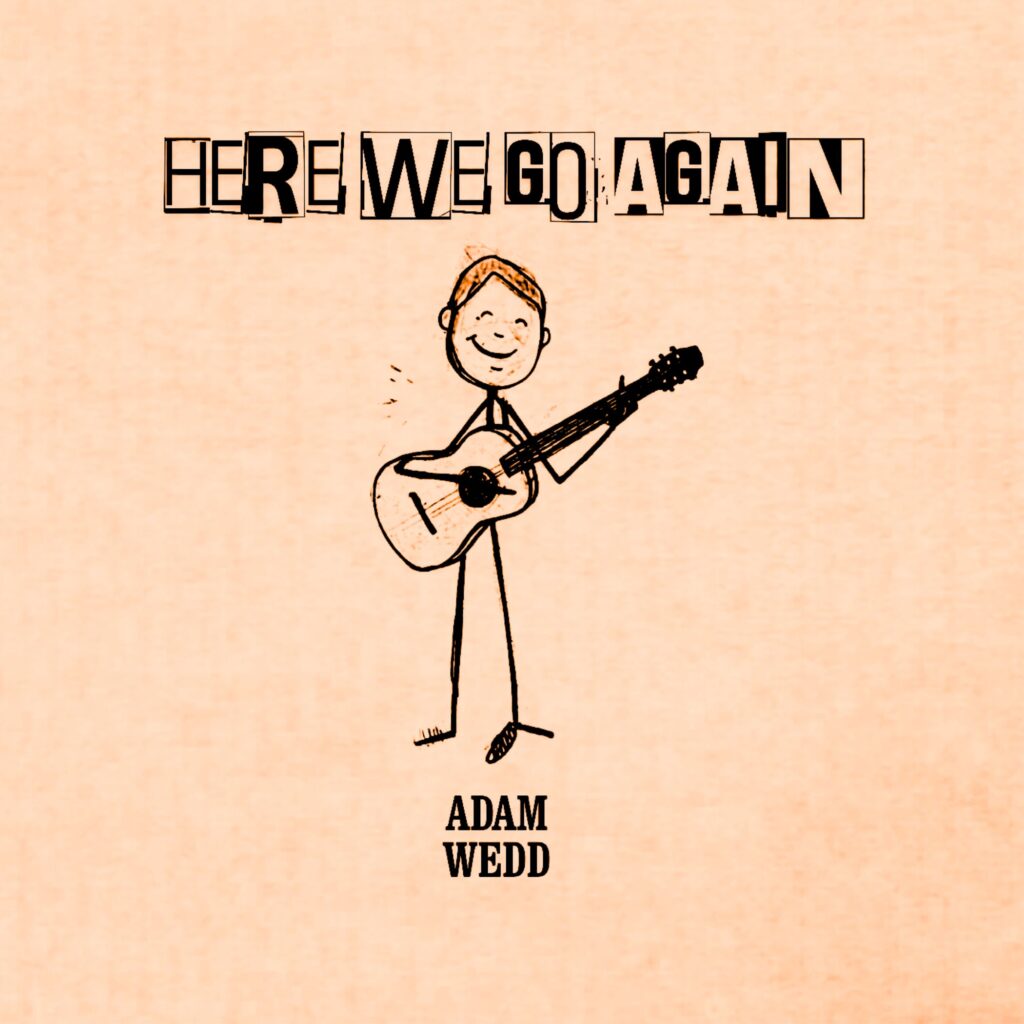
5. The artwork is often the first visual connection fans have with a release — what’s the story or concept behind the artwork for “here we go AGAIN”?
I think artwork should give you a feeling before you’ve heard a single note. For this one, I wanted something that captured that sense of cyclical momentum — that bittersweet “oh, we’re doing this again, are we?” feeling. There’s something almost optimistic about repetition when you frame it right. We went through a few ideas but landed on something that felt immediate and a little restless. I love when artwork makes you curious rather than just tells you what to think. Whether I totally nailed that is for the listener to decide, but the intention was always energy and movement.
6. With your album release show set at the legendary Cart & Horses, what can fans expect from that night, and how are you preparing to celebrate this milestone?
The Cart & Horses is just such a special room — it has that kind of history you can feel under your feet when you’re standing on the stage. I want it to be a proper celebration, not just a gig. There’ll be the full band, we’ll play the album front to back, there’ll be stories, probably some chaos, definitely some drink. I’ve been writing music since I was a teenager and this album is the most complete thing I’ve put out — it feels like everything I’ve been building toward. I want people to leave that night having felt something. That’s always the goal. I hope my music helps people feel something, or if they’re already feeling something, that it sits with them in that moment. That’s it, really. That’s the whole thing.