
Garbage Garden
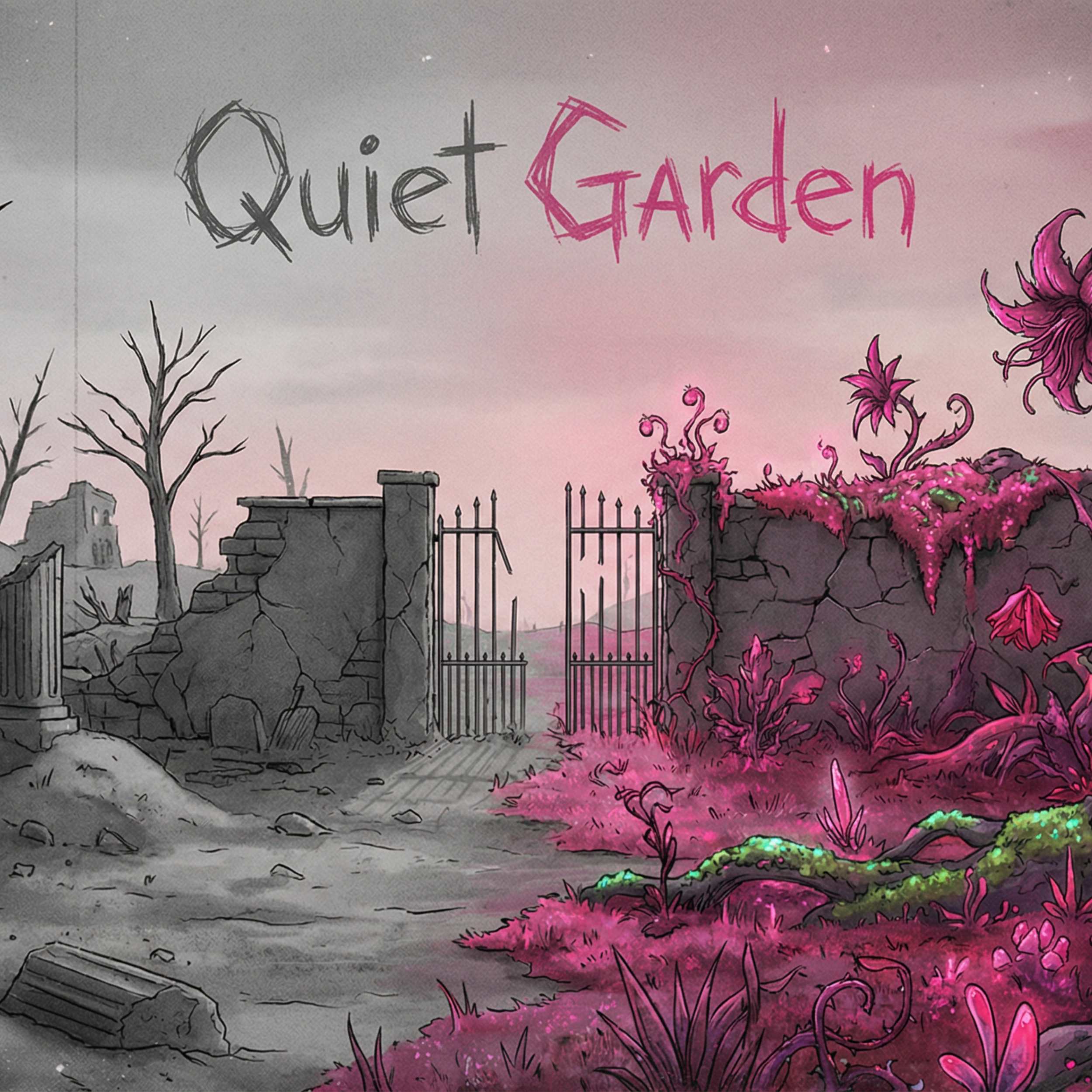
In this interview, Garbage Garden delves into “Quiet Garden,” unpacking unseen emotional labor, identity, and the haunting beauty of existing quietly within the “Still Being” series’ introspective world.
1. “Quiet Garden” introduces the “Still Being” series with a deeply introspective concept—what inspired you to focus on the unseen “ghosts” who quietly sustain others’ lives?
I was thinking about the people who exist in the background—those who support and carry the weight for others without ever really being acknowledged. Over time, I realized they function like ghosts: essential to the structure of someone’s life, yet almost invisible. That quiet, uncelebrated strength is what inspired the song. “Quiet Garden” came from wanting to recognize that unseen foundation and the bittersweet feeling of being indispensable but unnoticed.
2. The track explores the idea of existing beyond recognition, where devotion often goes unnoticed. How personal is this theme for you, and how did you translate that feeling into the song’s atmosphere?
It isn’t a direct autobiographical story, but it definitely comes from observing this dynamic in myself and in people around me. What interested me wasn’t the devotion itself, but what’s left behind when the recognition is taken away. I tried to translate that into the atmosphere: a presence that hasn’t disappeared, but has been reduced to something like ambient noise — constantly there, yet no longer truly seen.
3. You collaborated with co-producer Peachoman on this release. How did that partnership shape the evolution of “Quiet Garden” from a personal story into a more universal exploration of “The Noise”?
Working with Peachoman changed things quite a bit. At first, the track felt very private and specific to my own emotional experience. His perspective helped me step back and see it as something bigger. That’s when the idea of “The Noise” started to come in — all those external voices, expectations, and distractions that can drown out these quiet presences. The collaboration moved it away from a singular personal narrative toward something more universal that could exist in any human relationship.
4. The lyrics carry striking imagery, like “the closer I stand, the more I disappear.” Can you walk us through your songwriting process and how you craft such raw, evocative metaphors?
I usually don’t start with metaphors. I begin with a physical feeling or a condition — something that’s hard to name directly. Then I look for an image that behaves in the same way. “The closer I stand, the more I disappear” came from trying to capture that specific contradiction: being close to someone but still not really recognized. Once the internal logic of that feeling becomes clear, the right language and images tend to follow naturally.
5. Musically, the track feels both intimate and unsettling. How did you approach building the soundscape to reflect that sense of emotional erasure and internal struggle?
I wanted the sound to feel close, but slightly unstable. I avoided anything too dramatic or loud; I wanted it to be quietly unsettling. Instead of building toward a big emotional release, I focused on small distortions — subtle textures, restrained movement, and a sense of space that feels just a little too empty. It was less about expressing a momentary emotion and more about holding onto a persistent condition.
6. With “Still Being” set as an ongoing series, what can listeners expect next from Garbage Garden, and how will the project continue to explore the fragility of existence and human connection?
“Still Being” isn’t a linear story — it’s more like a collection of different states of existence. Each track looks at how our sense of self gets shaped, distorted, or sustained under different conditions, whether through relationships, social pressure, or isolation. Going forward, I want to keep exploring these shifts, not as one big narrative arc, but as various perspectives that slowly expand what it means to “still be.”