
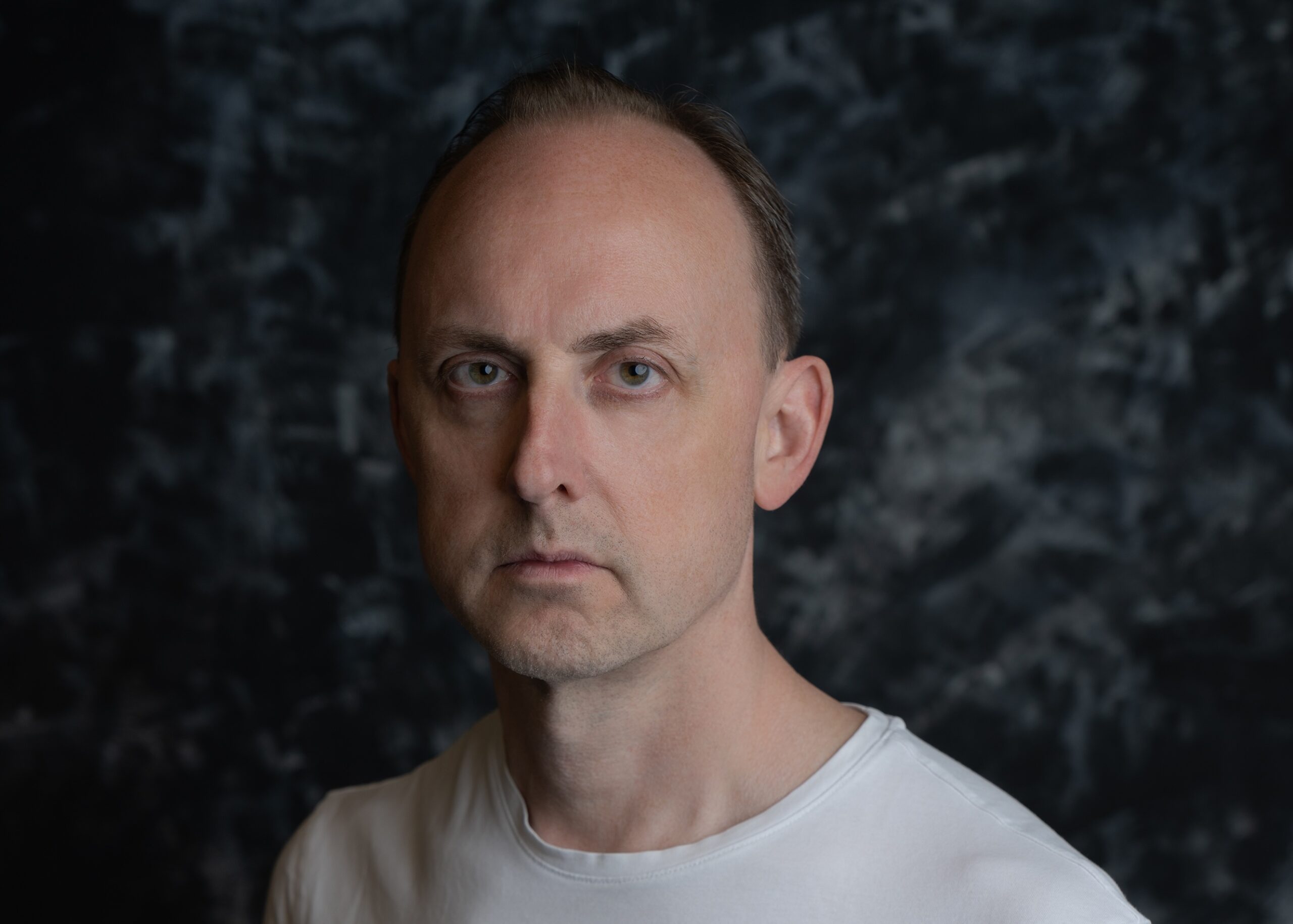
An intimate dive into Urban Hane’s En variant av himlen—exploring identity, isolation, and quiet emotional truths through minimalist, deeply personal songwriting shaped by introspection and rediscovery.
1. “En variant av himlen” feels like a deeply personal and introspective record. Can you tell us more about the emotional and mental space you were in while creating this album?
The previous EP, I had done while still living in a family setting that I expected to last, we had small children etc, so I didn’t really reflect that much in the process, just recorded a few song ideas I’d been carrying for a while in the small chunks of time that life allowed, whereas this time around, and for the first time in like a decade, I started having some time to myself to think and I didn’t really recognize who I was anymore. I couldn’t tell if I did the things I did because I still enjoyed doing them or if it was because I just wanted to be a person who enjoyed such things. The best metaphor I have is that it felt as if a membrane had separated me both from myself but also from the rest of the world. I felt very disconnected and I am only slowly starting to regain those relationships.
2. You describe the project as a “private room” inside your head, both creatively and physically through your home production setup. How did working in this isolated, self-contained environment shape the sound and identity of the album?
First of all, I hadn’t listened to much new music for a long long time so the sonic universe I was living in was very much the same as I had left it 15 years earlier. I don’t think any of the tracks I used for reference during production were later than from 2005 and most of them being much older favorites from the 70s and 80s, which of course shaped the production a lot. But like said earlier, I needed to reconnect with myself first, and for that I returned to what first drew me into ever making music in the first place. It may sound laced with nostalgia, but this is just where I was during the process. Also, compared to being in a band going into the studio like really rehearsed and prepared, most songs fell into place by just starting to record them and then just see what type of songs they turned out to be.
3. The album explores a world that is both romantic and cynical, where fleeting moments can carry lifelong significance. What draws you to these contrasts, and how do they influence your songwriting?
When starting out, I always wanted to write about extraordinary things, extraordinary people, extraordinary places etc but with age and hopefully some gained perspective, I have noticed that the events from my past that I think about the most, both the things I regret almost to the point of panic and the things I am profoundly thankful for, they all felt quite mundane at the time. Some pointless lie I told at some point and that I am still ashamed of, some girl that may or may not have been into me too but I never acted, some ordinary night with friends I’d do anything to experience again. This is where romance really lives, no matter what the world is trying to tell us. Treat your everyday life with the respect it deserves. It’s all you got.
4. The track “Jag är inte blind (I’m not blind)” touches on painful realizations and personal complicity. Was it difficult to confront and translate such honesty into music, and what do you hope listeners take from it?
The difficult part was rather on the personal side to accept that responsibility for how I was feeling at the time, in fact for how I had been feeling for many years. What someone actually put me through during a period in my life could only to some extent explain why moving on from it was so hard, whereas the fact that I allowed it for far too long explained it completely. And just for the record, I am not talking about abusive relationships here, no-one deserves that or to feel guilt that it happened to them. But regarding translation, as long as I know what it is that I feel, I have no problem writing about it, and I always assume that if I have felt it, many others have too. I think we are all much less unique then we like to tell ourselves.
5. Your music has been described as minimalist yet emotionally intense, with a distinctly Scandinavian atmosphere. How do you balance restraint and emotional depth in your production and vocal delivery?
Well, it is a solo act, so musically it is already there limited to what I can do on my own, and I also try not to overproduce and always only to add elements that are needed for what I’m trying to say. Singing in my Swedish native tongue of course make it stand out a bit, but I think that as a person, I have never really been the large gestures kind of man, so even though I can enjoy other artists e.g screaming parts of the lyrics, I’ve never felt quite myself when trying it out. I think, at least in part, that is a cultural trait too that may contribute to that “Scandinavian” thing.
6. Having been part of bands like Disharmonikerna and POST before focusing on your solo work, how does Urban Hane allow you to express things that perhaps weren’t possible in a band setting?
Although in both those bands we all shared some fundamental influences that of course resonate also in what I do solo, there are certain creative advantages not having to consider anyone else in the process and that you are not tied to any one band setting in terms of instrumentation and arrangement. Do I want a song with no drums, then it has no drums. And similar with any other instrument for that matter. Playing everything myself anyway, I have no problem killing darlings. Also lyrically, when in a band, I have at least to some extent tried to write lyrics that also fit the overall “brand” so to speak, whereas solo I can pretty much write whatever I feel is right for any particular song.
Copyright © 2026 The Inteviewist