
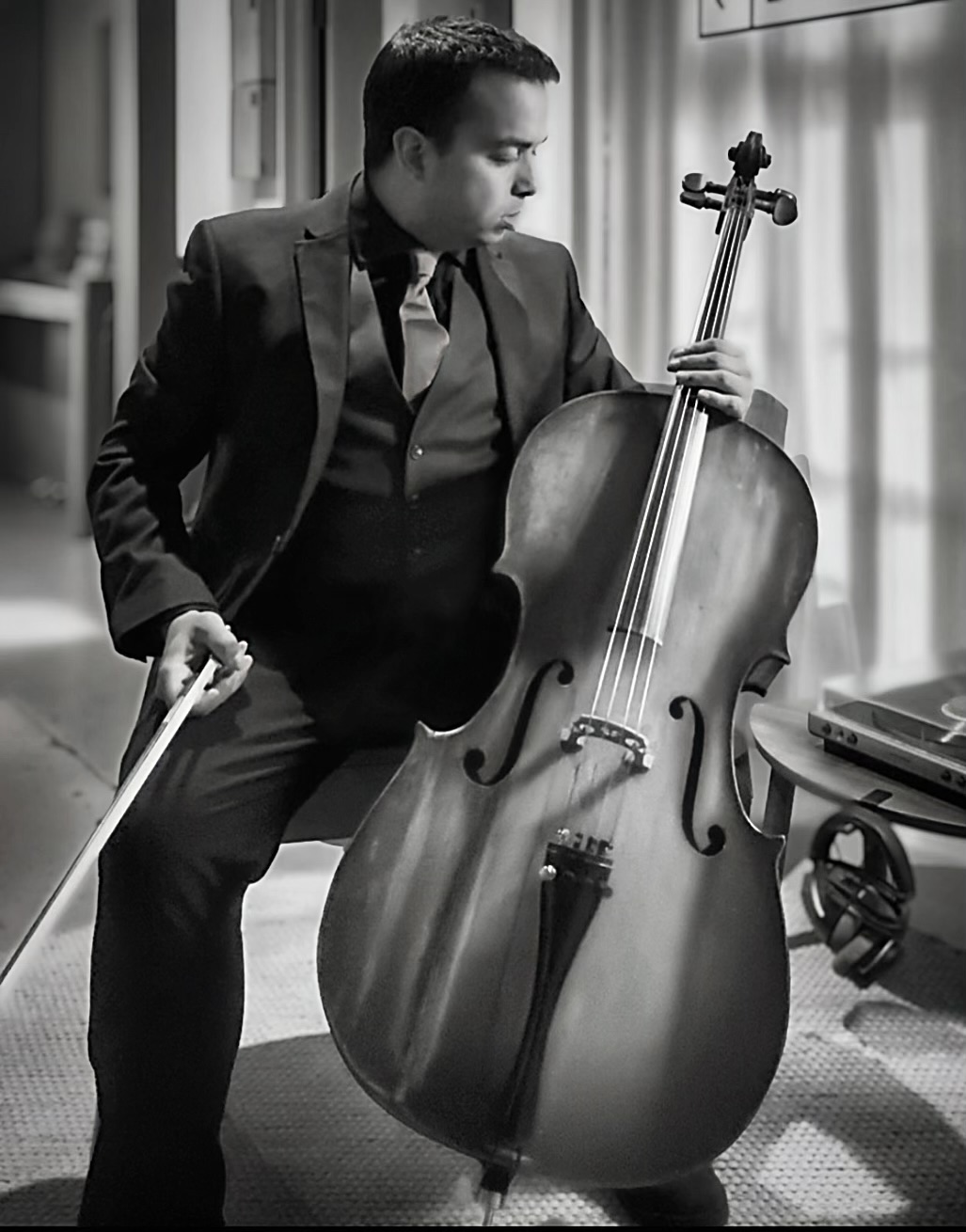
From Vienna’s streets to London’s studios, Angel Tarpov shares the journey behind “Incognito,” revealing raw emotion, artistic evolution, and the defining moment that shaped his identity as a composer.
1. Your journey from busking on the streets of Vienna to composing in London is incredibly evocative—how did those years shape the emotional core of “Incognito”?
I believe music evolves just as people do. During my studies, and hustles in Vienna, I was finding my voice. It was a different era—before the TikTok attention span—where people actually stopped to listen. I went through lots of composing, lots of material that never got released. Lots of material that almost no one heard, and quite a few that got exposure. ‘Incognito’ was the defining moment of that journey. It was the point where I stopped playing others’ music and stood firmly as a composer, saying: ‘This is who I am now.
2. “Incognito” is described as a “sonic signature of survival.” Can you dive deeper into the personal experiences and relationships that influenced the track’s theme?
Written and recorded in 2020—the year that changed everything—’Incognito’ was born from personal tribulations. I never expected my private struggles to mirror the global atmosphere so closely. The track ends like a door left slightly ajar; a crack of light to see what’s next. It was a moment of pure intuition that feels even more relevant today.
3. You chose a minimalist recording approach to preserve the raw cello texture—what challenges and advantages came with resisting over-production?
Today, everything feels overproduced—like using overwhelming filters and Photoshop on a raw human face. I wanted to capture the ‘grit’ and the breathing of the cello. While nothing replaces the intimacy of a live performance, for those listening at home, I wanted the record to feel honest and unmasked. We have the tools to be perfect, but I chose to be real.
4. The track blends cinematic melancholy with modern classical tension. How do you approach balancing traditional composition techniques with a more contemporary, atmospheric sound?
For me, the balance begins with a foundation in structural counterpoint and rigorous harmonic development. I’ve always been drawn to the logic of the Baroque and Classical eras—the way a single melodic motif can be transformed through imitation or how a clear, singing line can anchor even the most complex arrangement.
I approach the ‘cinematic’ side not as a replacement for these techniques, but as a new way to ‘clothe’ them. While the core of a track might rely on diatonic clarity or thematic variation typical of traditional forms, I use modern atmospheric textures—experimenting with more provocative key changes, or extended cello techniques—to blur the edges. It’s about taking those timeless, tonal foundations and placing them in a sonic space that feels vast and unpredictable. By blending the precision of classical part-writing with the ‘weighted’ silence and industrial grit of contemporary production, I can create tension that feels both ancient and immediate.
5. Having spent a decade performing live, what inspired your current shift toward studio work and film scoring, and how does “Incognito” reflect this transition?
It’s not so much a shift as it is an evolution. I still believe the cello is a ‘live’ instrument that needs to be felt up close to experience its raw emotion. However, composing has naturally drawn me into the more closed up atmosphere —a space for rebuilding and re-living a piece. I started cello at age 4, but when I began composing in my teens, my whole musical career approach changed for me. I knew then that this was my life’s dedication.
6. As you aim to establish yourself in the UK film and media scoring industry, what kind of visual projects or collaborations would best match your cello-driven, cinematic style?
I am open to any project where the story is central. Whether it’s film scoring or collaborating with other visionaries, I see every well-written piece as its own journey. Being a composer is hard work—it’s a life on the edge—but delivering a piece of music that helps someone find a part of themselves is the ultimate fulfilment. The rest comes and goes; the music remains.
Copyright © 2026 The Inteviewist