
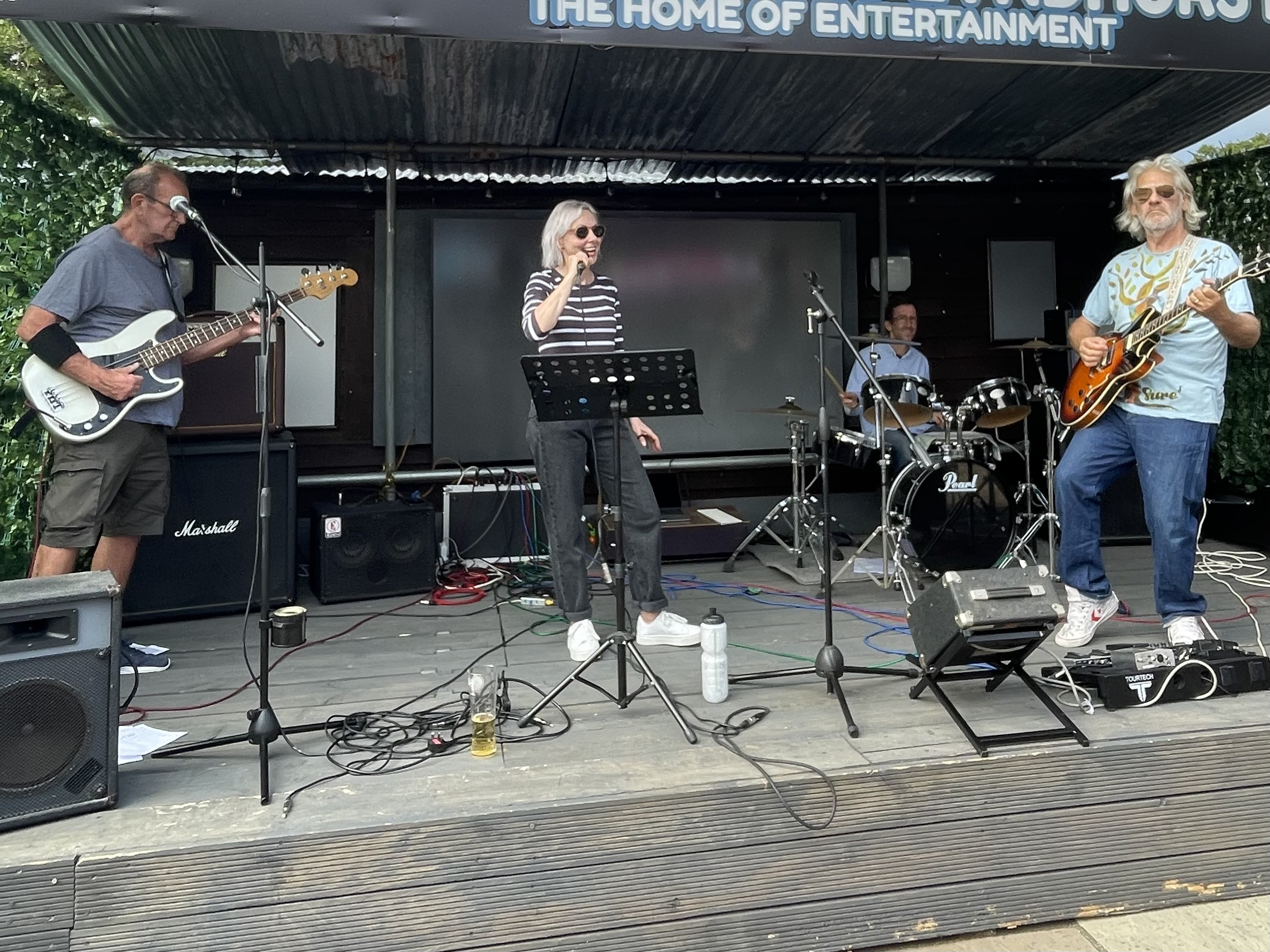
ALLEY (the band) explore love, loss, and escapism on Telling Stories, blending intimate lyricism with cinematic soundscapes in a vulnerable debut that captures emotional contrasts and the beauty of unresolved moments.
1. Telling Stories explores a wide emotional spectrum, from love and loss to escapism—what inspired you to center the EP around these contrasting experiences?
The inspiration really came from looking back at different moments that didn’t seem connected at the time, but all ended up feeling like chapters of the same story. Some songs came from very real, grounded experiences, relationships, goodbyes, that sense of holding onto something that’s slipping away. Others leaned more into escapism, almost like creating a world to hide in when reality felt a bit too heavy.
2. The lead single “Watching You Leave” captures a very raw moment of finality in a relationship. Can you tell us about the story or emotions behind this track?
“Watching You Leave” came from that very specific moment where everything is already over, but only one party in the relationship accepts the finality of the decision. It’s not explosive or dramatic, it’s quiet… and that’s what makes it hit harder.
The idea started with the image of literally watching someone walk away but feeling a sense of regaining your power after being made to feel so weak in the relationship dynamic. That mix of acceptance, helplessness and relief is the emotional core of the track.
3. Your sound blends indie, alternative pop, and rock influences. How have artists like Eliza McLamb, Becca Stevens, and Lucy Dacus shaped your musical identity?
As a lyric based band, we are influenced by artists who share that passion. Eliza McLamb has this really intimate, almost conversational way of writing. Her songs feel like you’re reading someone’s journal, nothing is over-polished. It made it more comfortable leaning into quieter, more vulnerable moments in our own songwriting.
With Lucy Dacus, there’s a weight and clarity to her writing that feels very grounded, she doesn’t overcomplicate things, but it still cuts deep. That balance of simplicity and emotional impact is something we’re always chasing.
4. Tracks like “La La Land” and “Daytime Drinking” seem to contrast fantasy with harsh reality—was that duality intentional when structuring the EP?
Yeah, that contrast was very intentional. Those two tracks almost act like opposite sides of the same coin.
“La La Land” leans into escapism, it’s that dreamy, slightly detached headspace where everything feels a bit more cinematic than it really is. It’s about choosing to see things the way you want them to be, even if you know it’s not entirely real. There’s a comfort in that, but also a kind of quiet denial underneath it.
“Daytime Drinking,” on the other hand, pulls everything back into reality, but not in a clean or resolved way. It’s messy, a bit self-aware, and sits in that space where you know things aren’t right but you’re not quite ready to fix them. It’s less about escape and more about avoidance.
Placing those songs within the EP was a way of showing how people move between those states. You don’t just live in fantasy or reality, you drift between them depending on what you can handle in the moment. Structurally, it helps the EP feel like a cycle rather than a straight line: you escape, you come back down, you try to cope, and sometimes you escape again.
5. The band’s origin story is quite unique and spontaneous. How has that initial connection influenced your chemistry and songwriting process today?
That spontaneous start ended up setting the tone for everything that followed. Because there wasn’t this long, calculated build-up, the connection was very instinctive from the beginning, we were just reacting to each other in the moment rather than overthinking where it could go.
That’s had a big impact on our chemistry. There’s a level of trust that came quite naturally, where no idea feels too rough or too personal to bring into the room. It means we can move quickly, follow gut instincts, and not get stuck trying to make everything “perfect” before it’s even had a chance to breathe.
In terms of songwriting, it’s kept things very collaborative and open. A lot of our songs start from a small, almost throwaway idea, maybe a line, a melody, or even just a feeling and then grow organically because we feel free to push it in different directions. There’s less attachment to “this is my part” or “your part,” and more focus on what serves the song.
6. As this is your debut EP, what do you hope listeners take away from Telling Stories, and how does it represent who ALLEY the band is moving forward?
I think more than anything, we want people to feel seen by it. Telling Stories isn’t trying to give answers or tie everything up neatly, it’s about sitting in those in-between moments where things are unresolved, complicated, or even contradictory. If someone hears a line or a feeling in one of the tracks and thinks, “yeah, that’s exactly it,” then it’s done what it’s supposed to do.
As a debut, it’s a pretty honest snapshot of who we are right now. It leans into vulnerability, but it’s not afraid of contrast either, sonically or emotionally. That balance between intimacy and experimentation is something we definitely want to keep pushing forward.
Going ahead, I think ALLEY the band will always sit in that space between raw storytelling and cinematic atmosphere. This EP kind of lays the foundation: honest lyrics, dynamic sound, and a willingness to explore uncomfortable emotions without dressing them up too much. It’s our statement of arrival, the beginning of our journey.
Copyright © 2026 The Inteviewist