
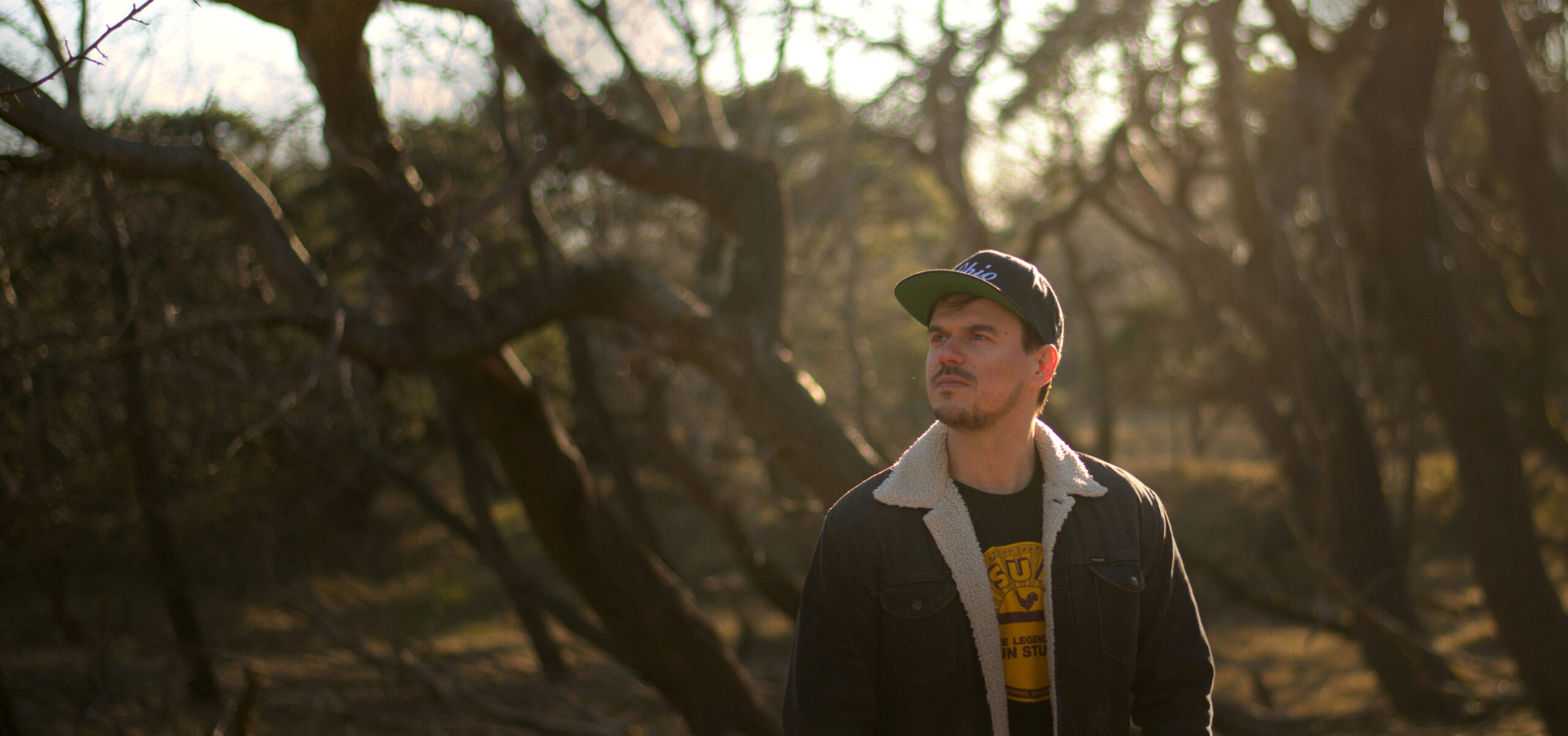
In this interview, Joseph Turner & The Dudes of Hazard discuss the inspiration behind “A New Moon,” exploring themes of transition, quiet hope, collaboration, and the personal landscapes that shape their reflective indie-folk sound.
1. “A New Moon” feels like a journey from uncertainty to quiet hope. Can you take us back to the moment the song was born and what you were personally navigating at that time?
When I wrote “A New Moon”, I was in a period of transition. The kind where some doors have clearly closed, but the new ones haven’t quite opened yet. I was trying to make sense of endings and beginnings at the same time, which can leave a person standing in a bit of emotional fog.
That’s where the song came from. It started as a reflection, almost like a conversation with myself about uncertainty and the strange hope that hides inside it. I’ve always felt that the moments when you don’t know what comes next can be the most honest ones. You’re stripped of plans and expectations, and all you can really do is listen to what life is telling you.
So “A New Moon” became a way to sit with that feeling. Not to solve it, but to acknowledge it. Sometimes the best thing you can do is accept the darkness for a moment and trust that something new is slowly beginning on the other side of it.
2. The moon’s phases mirror the emotional arc of the track — light, shadow, and return. Was that symbolism present from the beginning, or did it reveal itself as the song developed?
The symbolism of the moon actually revealed itself along the way. When I started writing the song, I wasn’t consciously thinking about lunar cycles or anything like that. I was simply trying to capture that feeling of standing between darkness and possibility.
But as the song developed, the metaphor of the new moon started to make perfect sense. A new moon is interesting because it represents a moment when the moon is technically there, but you can’t really see it yet. It’s basically a reset in the sky. That idea felt very close to what I was experiencing at the time.
Life tends to move in cycles like that. You have periods of light where everything feels clear, and then moments where things fade into shadow for a while. But the return is always part of the cycle too. In that way, “A New Moon” became a reflection on the idea that the same moment in life can look like a goodbye from one side and a hello from the other.
3. Your sound blends indie folk intimacy with subtle pop hooks and traces of your rock background. How do you balance softness and strength in your songwriting without losing emotional honesty?
I think that balance comes from letting the song decide what it needs. I grew up loving a lot of different kinds of music, from rock records that had real punch to quieter folk songs that felt like someone was telling you a story late at night. Those influences naturally find their way into my writing.
With Joseph Turner & The Dudes of Hazard, the goal is always to keep the emotional core of the song intact. I usually write and compose the songs first with just an acoustic guitar and my voice. Once that foundation feels honest and strong, I start building the arrangements around it. Sometimes that means keeping things intimate, and other times a melody asks to open up a bit more, where subtle pop hooks or a touch of rock energy can lift the song without losing its sincerity.
For me, songwriting is about staying close to the feeling that sparked the song in the first place. As long as that feeling stays at the center, you can move between softness and strength without losing the truth of the story.
4. The Dudes of Hazard are described as a rotating group of collaborators. How does that fluid dynamic influence the creative process, both in the studio and on stage?
The Dudes of Hazard are really a group of friends and musicians who come together whenever a song calls for it. That flexibility has been one of the most enjoyable parts of making this record. Every musician brings a different personality and musical instinct to the table, and that keeps things fresh.
Some songs were recorded in very focused one-on-one sessions, while others turned into larger group moments where everyone added their own color to the arrangement. Those sessions had a great energy. There’s something special about watching a song evolve when different people start contributing ideas.
On stage it works in a similar way. Depending on the show, different Dudes might step in to back me up, which gives the live performances their own character each time. It keeps things organic and reminds me that music is, at its heart, a shared experience.
5. As the first glimpse into a 13-track album, “A New Moon” sets a reflective and vulnerable tone. What can listeners expect from the rest of the record — will it explore similar emotional landscapes or venture into new territories?
The album definitely lives in that reflective space, but it explores a range of moments that come from real life. These songs were written over a period where I was thinking a lot about the things that shape us as people.
Some tracks look at the freedom and perspective that come from traveling, while others deal with heavier themes like loss, fear, and the lessons that come with growing older. In many ways the record is a collection of personal stories about navigating the school of life, if you want to call it that.
What ties everything together is honesty. Each song comes from a real place, whether it’s a moment of doubt or a sense of wonder about the world. If “A New Moon” represents the beginning of that journey, the rest of the album walks through the many roads that follow.
6. You write from the Dutch delta, a place that carries its own atmosphere and history. Does your environment consciously shape your music, or is it more of a subtle undercurrent in your storytelling?
Landscapes tend to shape your imagination whether you notice it or not. Wide horizons, the ocean, open skies, mountains, those kinds of surroundings create a certain headspace where reflection comes naturally, and that atmosphere often finds its way into the music.
Some of the writing for this album also developed while spending time traveling across the United States. Long stretches of road give you time to think, and somewhere between those miles a good few of these songs began to take shape.
So the record isn’t rooted in one location, but different horizons definitely left their fingerprints on the stories.
Copyright © 2026 The Inteviewist