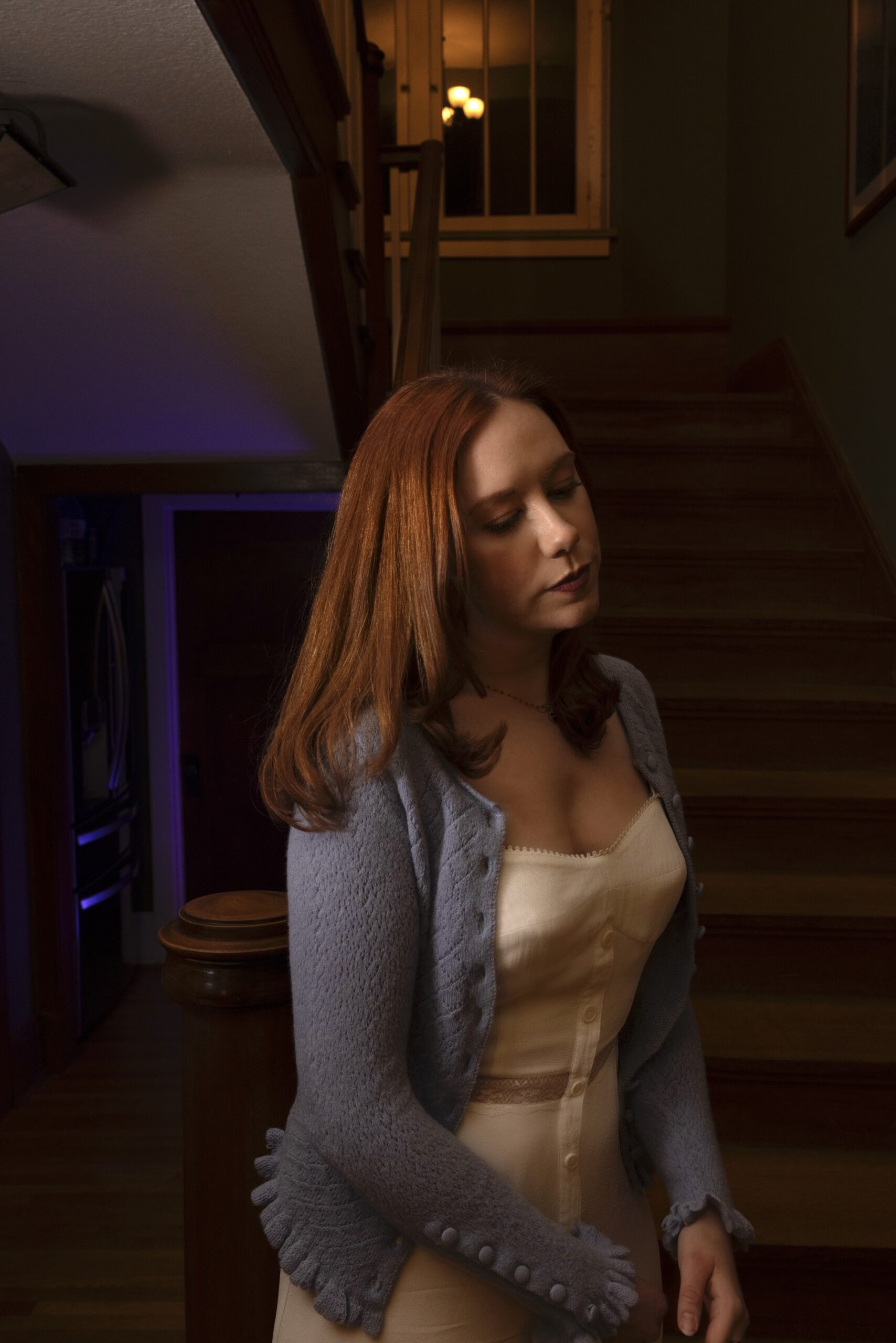
In this interview, Heddy Edwards reflects on grief, gratitude, and creative rebirth, revealing how “Cinematic Vision” became the emotional anchor of her debut EP and personal philosophy.
1. “Cinematic Vision” carries the powerful refrain, “the other side of hell is a heaven so delicate.” Can you take us back to the exact moment that line came to you, and why it became the emotional core of the EP?
In 2024, my family and I were losing a loved one to terminal cancer. Aside from knowing we’d lose them, it was extremely hard to watch everyone I love have to know grief so intimately, too. During that time, my husband and I took our dogs, packed up the car, and went to help care for them for the last six weeks of their life. One stormy day, I was feeling particularly down, and my husband and I went to stop for gas. As he got out of the car, I sat there quietly listening to the rain fall. Suddenly, I was overcome with immense appreciation and gratitude for life and ordinary moments, enough that it moved me to tears—and I opened my notes app and wrote down a short poem that read “on the other side of hell / is a heaven so delicate / you put gas in the truck as / I watch the rail fall.” I closed out of it and didn’t think much of it until about six months later, after we had unfortunately lost our loved one. I was playing chords that felt reflective yet grounded, and looked through my notes app for anything I’d written down, and it struck me as being the missing piece for the chorus. It was then I realized it was the ‘thesis statement’ of the album. I knew instantly that it summed up everything I was trying to say on the rest of the album, and would hope to share with anyone going through a hard time.
2. You worked closely with Alan Day (Four Year Strong) and Jay Maas on this release. What did Alan bring to the production and instrumentation that helped translate such a personal song into a full, living arrangement?
Alan is amazing. He is a vocalist and guitarist in a band called Four Year Strong, and I’ve been honored to get to work with him on five songs now—a previous song of mine called “black tunnel,” and the other four songs on my upcoming EP. He has a lexical knowledge of all genres of music, and because I have similar wide listening habits, I believe we were able to intuit each other’s ideas quickly, even from our first session together. And I don’t say this lightly, but I think he is a musical genius. He can pick up any instrument and improvise and it sounds incredible. He played every instrument on this song and the whole record—guitar, bass, keyboards, drums, you name it. Before I worked with him, I was producing myself with mostly samples and synth keys, and he singlehandedly helped me to bring more of an organic, rock-edged sound to my songs like I’d been wanting to. And that’s exactly what he did here, especially with the pre-chorus guitar riff he came up with, which added such an Americana flair to the song and transformed it into the slightly twangy roadtrip anthem I was hoping it could be. Not to mention his mixing, and Jay’s wonderful mastering, give such a nostalgic feel to the music.
3. The song draws from 90s and early-2000s pop-rock and alternative influences like Sheryl Crow, Aimee Mann, The Cardigans, and The Goo Goo Dolls. How do those influences show up in your songwriting and sonic choices on this track?
I think this song, “Cinematic vision,” is one of the more classic or nostalgic-sounding songs I’ve written. The chords I was playing reminded me of the period of time where Sheryl Crow was producing Stevie Nicks’ music in the late 90s and early 00s—including for the soundtrack of one of my favorite films, called Practical Magic. I could tell as I was writing it that the song had a certain pop-rock grit to it, tinged with a bit of Americana. And the melody that came to me felt like it wanted to be my own take on a 90s soft rock radio track, which I have a fondness for, as a 90s kid. I love the electric guitar tone on Sheryl Crow’s “If It Makes You Happy,” and so many songs from The Cardigans’ Long Gone Before Daylight album, especially “You’re the Storm,” that lean more alternative rock or even slightly country-sounding. I also replayed Aimee Mann’s album Lost In Space to a pulp last summer, around the time I recorded my album. So these were all part of the references I gave Alan before our session. Then, for the softer parts like the verses, I wanted them to emit a similar energy to the Goo Goo Dolls in songs like “Name.” I was obsessed with the Goo Goo Dolls in high school, and I love how their songs always feel wistful, warm, and intimate.
4. Grief plays a central role in the story behind this release, but so does gratitude and light. How did writing this song help you process those emotions, and did it change the way you view ordinary moments in life?
It absolutely did change the way I view ordinary moments. I am someone who has a plethora of mental health issues—I’ve been diagnosed with OCD, anxiety, and major depression. For a long time, it was difficult for me to feel joy even during life’s most exciting highs or doing the things I love most. When you’re unable to feel happiness during your favorite things, mundane days don’t seem to stand a chance. I have, frequently in the past, stayed up incredibly late to avoid starting another day, and then when it arrived the next morning, immediately tried to go back to sleep so it didn’t have to start yet. I’ve been so sad or numb that self-care felt like an impossible mountain to climb—even to brush my teeth, take a shower, or change out of the same clothes I’d been in for two or three days straight. But, as I watched my loved one battle cancer, I saw how much they looked forward to “normal” moments like watching their favorite TV show or eating strawberry shortcake after dinner. It often brought me to tears how much true, deep joy they were able to both feel and express, although they were quite literally facing death and the greatest unknown—most people’s absolute worst fear. It started to really dawn on me that when we miss an era of our life, it’s the ordinary moments we wish we could go back to, like watching a movie with family, going out to dinner with friends, or moving our bodies while they are agile and healthy. For the first time in my life, I started to appreciate routine and wanted to lean into mundanity and take better care of myself—to really view each day as a gift as opposed to a burden. That’s something I am ashamed to say, but it’s the truth. Not to say that an attitude shift can change your brain chemistry, but that shift did inspire me to take better care of myself, which led to doctors’ appointments, specialized therapy, and habits that improved my mental health. Before this experience, I had spent my whole life being afraid of grief and being lucky not to have to engage too much with it. I always thought I wouldn’t survive it or being so close to it, but was shocked to find that it gave me a gift: it made me more sincere, resilient, appreciative, and—as my family healed—it allowed me to feel joy, even on my worst days, deeper than I could have previously imagined.
5. This is the first single from your debut EP, and you mentioned there was a ten-year period where fear kept you from writing. What shifted during the pandemic that gave you the confidence to return to music and finally release your work?
In 2019, my husband and I were rear-ended while we were at a standstill on the expressway. Everyone was totally fine, but it made me realize our lives truly can be over at any moment—and that I had put off my biggest dream. If something had happened to me in that moment, I would have never even tried to pursue music. Shortly after that, the pandemic was the first time I didn’t have a daily commute for my career, and I had seen some videos about virtual music production courses. I wondered if, with my extra time, I could take those classes and try working on some songs. As soon as I got started, I was elated to find that melodies still came to me and that writing music both energized me yet calmed my nervous system. I do a lot of automatic writing, with minimal editing, where I keep most of the words that come to me as I improvise a melody idea. When I started that, so many subconscious thoughts came out, and I discovered those lyrics were able to teach me something about myself as I read them back. In that way, it felt like I was channeling the words and music from another realm, which inspired me on an almost spiritual level, as a non-religious person. After I wrote a few songs for those classes, I decided I would release my first official song before I turned 30. I took a second music production course, and then got to work in my spare time building out a few songs, and hunting down someone to mix and master them. I don’t know if I was totally “confident,” but I felt ready and eager to just release them and work toward my dream, rather than perpetually languish waiting for “someday.” My first song was posted about a week after my 29th birthday… and now this is song five! And I’ll have eight total songs out by this spring, once the full EP is out.
6. With The Other Side of Hell Is a Heaven So Delicate serving as both the EP title and a personal philosophy, what do you hope listeners—especially those going through difficult times—take away from “Cinematic Vision”?
I would hope to tell them that, even in the darkest of times, we can find a fragile light and nurture it. That there is always good in the bad, and some bad in the good; we need grief to fully appreciate, understand, and be able to feel true joy in technicolor. Life is a perpetual cycle of sorrow and joy, and no matter which side of that wheel we’re on, we are certain to visit the other one again soon. This, to me, is what makes life bearable. It helps me to know that sadness will pass, but also that joy is fleeting, so I should savor every emotion for what it is, and appreciate it for what it can teach me. The other side of hell is a heaven so delicate—we just have to be courageous enough of heart and spirit to endure, and find it.
Copyright © 2026 The Inteviewist