
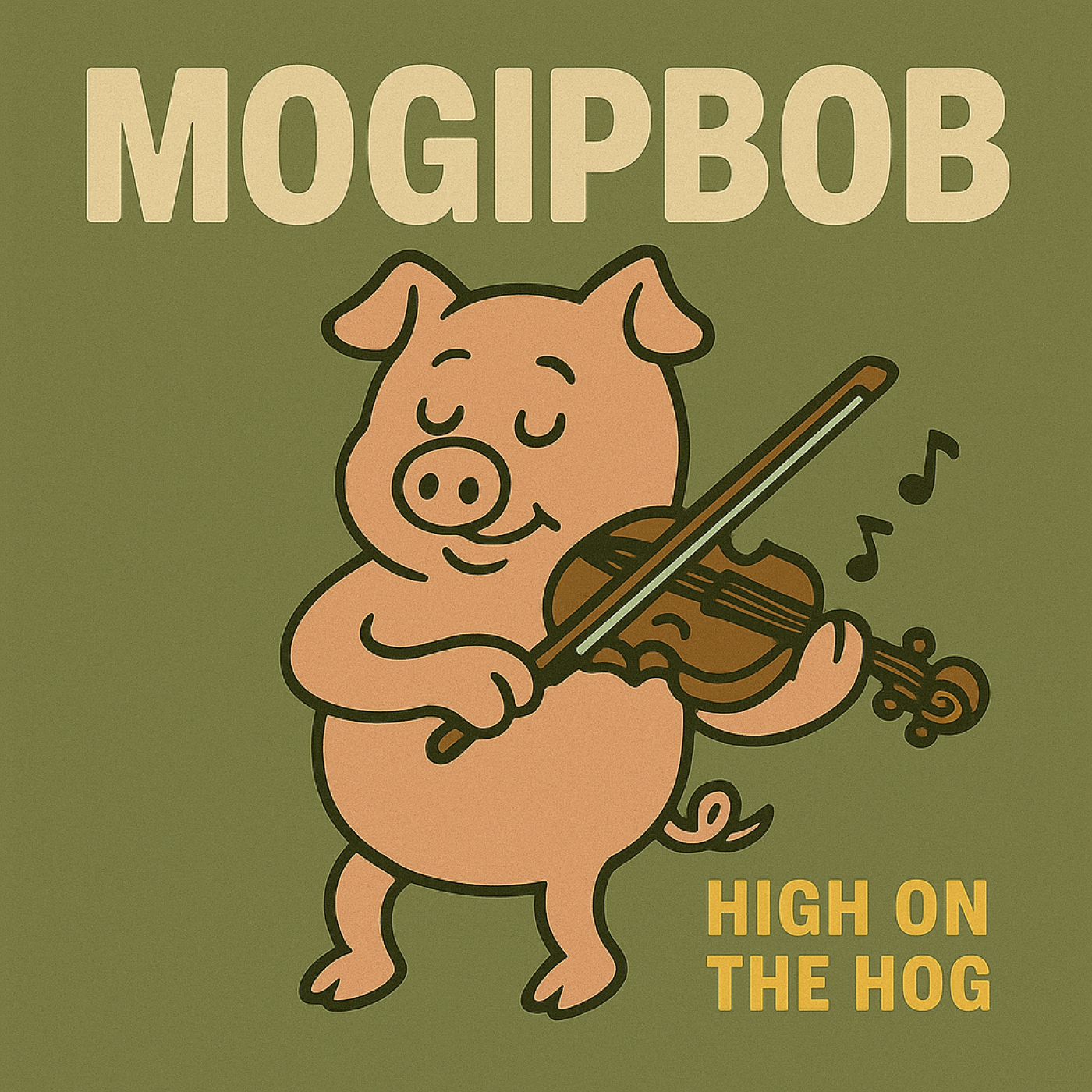
On High on the Hog, Mogipbob turns Alberta’s everyday routines into humorous stories, blending folk, country, and retro grooves while inviting listeners to slow down and notice life’s quiet details.
1. High on the Hog feels very lived-in, like snapshots of work, routine, and small-town moments. How much of this album comes directly from your own daily life in Alberta, and how do you decide which moments are “song-worthy”?
A lot of it comes straight from everyday life in Alberta. I am drawn to ordinary moments that feel real and familiar. A quick conversation, a routine job, or something small that lingers longer than expected. Those are usually the moments that become songs. If something makes me pause and think “that’s a story,” it is probably song worthy. I like capturing life as it is lived, not just the highlight reel.
2. The record blends folk and country storytelling with hints of 70s pop and funk. Were those influences intentional from the start, or did they naturally creep in as the songs took shape?
The storytelling side was intentional from the beginning, but the mix of folk, country, and those 70s pop and funk flavors happened pretty naturally. I grew up around a wide range of music, so when I started shaping these songs, different influences just showed up where they fit. Some songs wanted a warm, simple feel. Others needed a bit more groove. I mostly followed what felt right for the story.
3. Humor plays a big role on the album, even when the themes turn reflective. What does humor allow you to say in your songwriting that straight seriousness might not?
Humor makes things more human. Life can be reflective and serious, but it is also awkward and funny at the same time. Humor lets you talk about real experiences without sounding heavy handed. It opens the door for people to connect with the message in a more natural way. Sometimes a small smile helps a line land a little deeper.
4. You wrote all the songs yourself but used AI tools for the music and vocals. How did that process change the way you approached melody, structure, or experimentation compared to working with traditional musicians?
Using AI tools changed the process in a good way. It gave me the freedom to experiment with melody and structure without worrying about time, budget, or logistics. More importantly, it is allowing my stories to be heard. The songwriting still starts with the same ideas and emotions, but the tools help bring those ideas to life in a way that might not have been possible otherwise.
5. There’s a strong conversational voice running through the album, almost like you’re talking directly to the listener. Do you picture a specific audience when you write, or are these songs mainly conversations with yourself?
The conversational tone is pretty natural for me because that is how the songs begin. It often feels like I am talking something through out loud. I am not picturing a specific audience so much as imagining someone sitting nearby and listening. The songs are personal, but they are meant to feel shared.
6. High on the Hog doesn’t feel rushed or trend-chasing—it invites listeners to slow down. What do you hope people take away from the album after sitting with it from start to finish?
I hope people finish the album feeling like they spent time somewhere real. It is meant to be taken in at a steady pace rather than rushed. If someone walks away noticing the small details in their own life a little more, that would mean a lot to me. The album is really about slowing down and appreciating the ordinary moments that make up most of life.
Copyright © 2026 The Inteviewist