
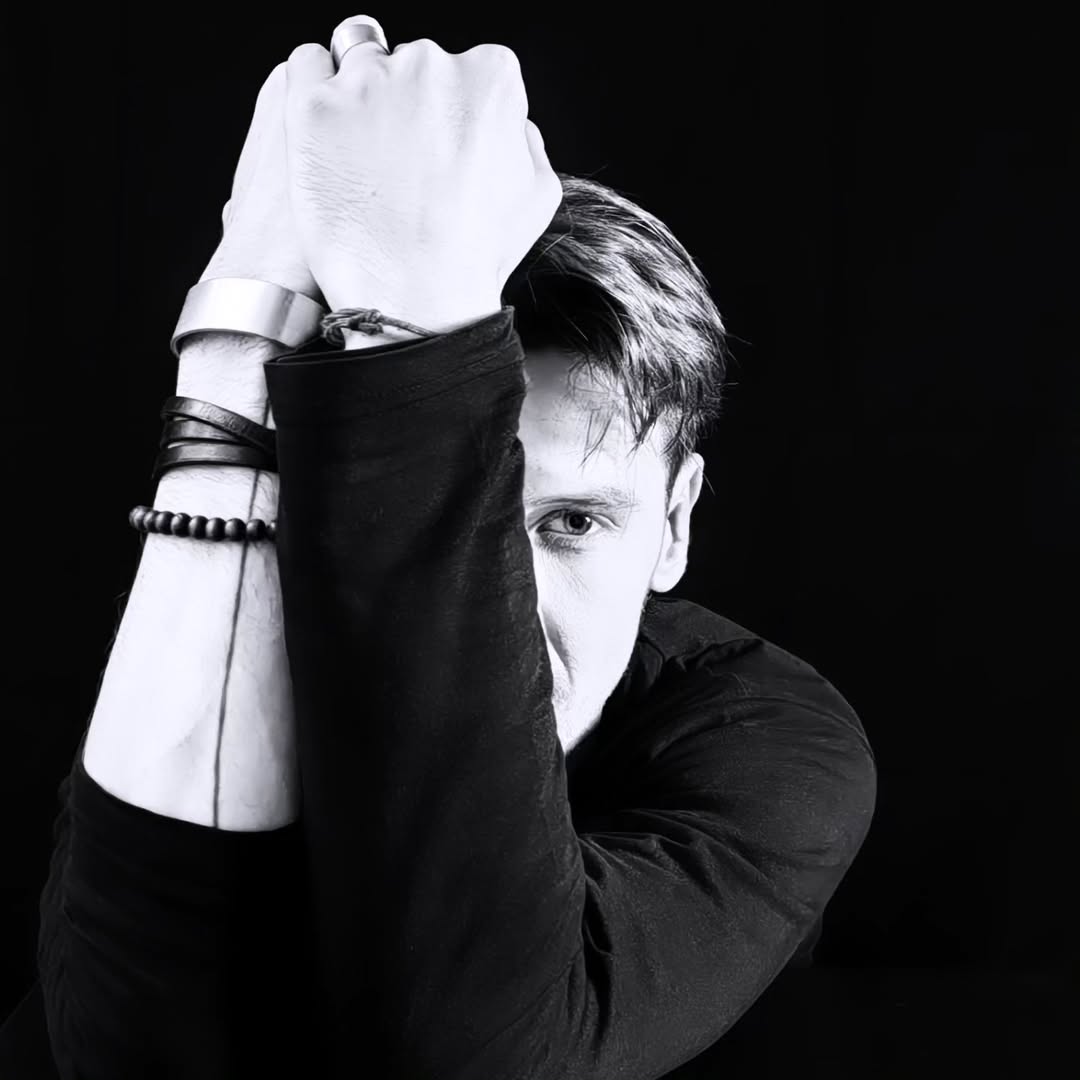
Dream-born neoclassical composer Serij d’Artosis opens up about translating fragile emotions into sound, working in solitude, and shaping Vestiges de Rêves as a cinematic journey through memory, space, and introspection.
1. Rêve1: Vent Fragile feels deeply introspective and dream-driven. How do your dreams usually translate into musical ideas, and do they guide the structure or emotions first?
Rêve 1: Vent Fragile” is a track from my upcoming EP, all of the compositions of which were inspired by my dreams. Dreams are the starting point for this album—they don’t impose a structure, but they carry a very distinct emotional charge. I then try to translate these emotions into sound: timbre, tempo, tension, and space. The structure of the music comes later, in the process of consciously organizing these impressions. Dreams are fragile and ambiguous—exactly how I want the emotions in these compositions to be.
2. You handle the entire creative process alone, from composition to production. How does working independently shape your artistic freedom—and your challenges?
I begin my entire creative process by composing at the piano — it’s definitely the most enjoyable and natural stage of making my music. At that point everything is still very intuitive and emotionally pure. Later comes the moment of recording the piano, which means playing around with microphones and searching for a sound that really “clicks” with my ear. Once the recording is in the computer, the next stage begins: working with plugins, sound layers, and composing using a MIDI keyboard. This part of the process can be very painstaking and requires quite a lot of knowledge to extract exactly the sound I’m looking for from a specific plugin-instrument.
On the one hand, this gives me enormous comfort and freedom — I decide on every detail, even the smallest one. Today’s plugins and extensive sound libraries offer incredible possibilities and allow me to realize very personal sonic visions. On the other hand, I miss working with real musicians and the energy that emerges from playing together. Today, this is one of my dreams: to be able to play with real musicians.
3. Neoclassical minimalism plays a key role in your sound. What elements from artists like Ludovico Einaudi or Yann Tiersen resonate most with you, and where do you feel you diverge from them?
Neo-classical minimalism feels very close to me, and Ludovico Einaudi and Yann Tiersen have played a huge role in that. I’ll start by saying that it was Ludovico Einaudi’s compositions that motivated me to begin learning the piano five years ago. What moves me most in his music is the sense of vast space — both in the structure of his pieces and in the interpretive freedom they offer the listener. This openness creates room to breathe and allows emotions to resonate without haste.
Yann Tiersen, on the other hand, fascinates me as a multi-instrumentalist. I’m always in awe of the moment when he steps away from the piano, reaches for the violin, and shortly afterward for the accordion. This natural ease in moving between instruments gives his music a unique sense of narrative and character.
As for the differences, I feel that as a creator I more often and more consciously explore emotions and atmospheres that are commonly considered “unpleasant” — such as sadness, grief, inner conflict, or loneliness. Although these are heavy emotions, in my view they remain deeply important and worthy of attention. It is often within them that the greatest honesty and truth are found, which I try to translate into sound.
4. The EP Vestiges de Rêves suggests fragments of memory and subconscious imagery. What unifying thread connects the pieces across the EP?
The entire album is a kind of record of dreams, captured in a form reminiscent of film music. This element is what binds all the pieces together and gives them a shared context, allowing them to form a single, self-contained whole. I treat a dream as a journey — full of images, emotions, and unexpected turns — which in itself becomes a story and a narrative.
It was very important to me that this musical record of dreams be presented precisely in the form of movie music: narrative, evocative, and guiding the listener through successive scenes, even if they are not fully defined or entirely unambiguous.
5. Recording between Frankfurt am Main and Paris adds a geographical duality. Did these locations influence the mood or texture of the music in any way?
Recording between Frankfurt am Main and Paris had a meaning for me that was more subtle than literal, but it definitely influenced the mood of the music. Frankfurt is associated in my mind with greater austerity, order, and focus — it was easier for me there to work on structure, detail, and the silence between sounds. Paris, brought more softness, melancholy, and a certain poetic quality that naturally seeped into the sound.
This geographical duality is therefore not directly audible in specific motifs, but is present rather in the texture and emotional balance of the pieces. I think the tension between these two places helped me maintain a balance between coolness and intimacy, which works well with the overall dreamlike character of the material.
6. You’ve said, “It wasn’t me who found the music. The music found me.” Looking back at this release, what did the music reveal to you about yourself as an artist?
I don’t come from a musical family — my mother is a geologist and my father is a carpenter. There was never any music in our home. And yet, at the age of 33, when I first sat down at the piano, and two years later began composing my own pieces, I discovered something remarkable: that I can express emotions, experiences, and values not only through words, but also through sound.
If someone had told me ten years ago that I would be composing music and playing the piano, I probably wouldn’t have believed them. Back then, I didn’t know that there was a part of me capable of describing reality, emotions, and feelings through notes. Music allowed me to discover this side of myself and give it form — intimate, direct, and something I can share with others.
Copyright © 2026 The Inteviewist