
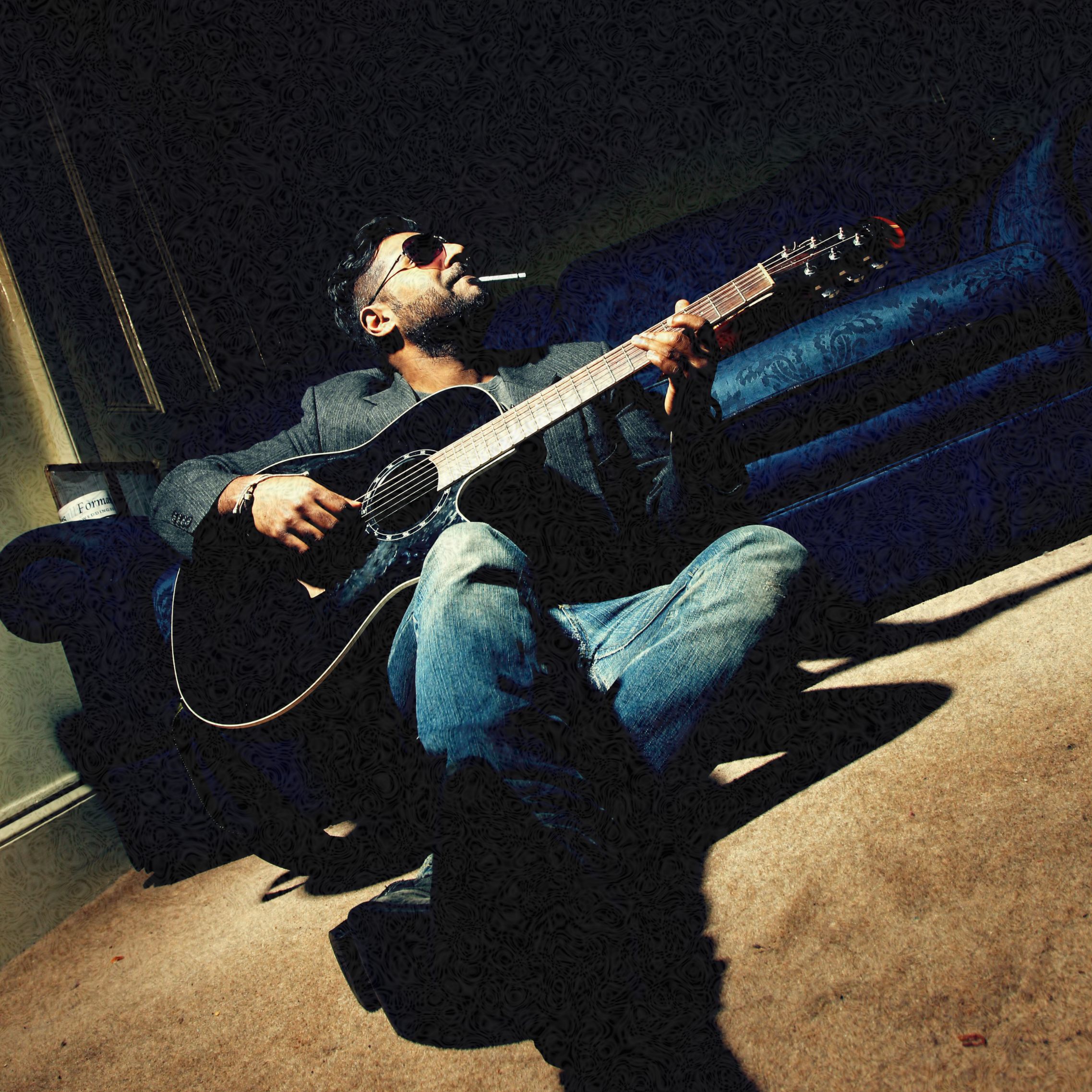
Rooted in instinct, honesty, and lived experience, this interview explores Whiskey General’s Mooreish—its emotional core, collaborations, personal loss, and why it feels like a defining closing chapter.
1. Mooreish feels confident without being flashy, very grounded in instinct and lived experience. When you were writing and producing the album, how conscious were you of stripping things back to what truly mattered emotionally?
It really depended on the song and who I was writing with. As the producer, I actually love the paraphernalia that comes with a track. In fact, my co songwriters often joke that I over produce rather than under produce.
What kept me grounded was always the lyrics and the message. The lyrics act like an anchor for me. No matter how far a song wandered, if the words felt honest and necessary, I knew I was on the right path. If the production started pulling focus away from the meaning, that’s when I’d strip things back. That, and imagining both Rich and Jack rolling their eyes, when I sent the production demos to them.
But it wasn’t about minimalism. It was about instinct. Mooreish comes from lived experience, and the production had to respect that rather than dress it up. In a time when AI in music is becoming more common, grounding songs in real words and real human experience matters even more to me.
2. The album opens with the raw urgency of “The Beast” and moves into the politically charged “Love Like a River,” featuring the Zamar Gospel Choir. How did those collaborations and themes shape the album’s early momentum?
The Beast was initially written with Jack Evans, a long term collaborator who also plays guitar across most of the album. We’ve worked together for a long time, toured together, and even lived together in London, so that collaboration is almost instinctive. We’d already played The Beast live before it was recorded, at a time when everything felt urgent and unresolved, which naturally fed into the energy of the track. The finale is a nod to Kate Bush if you’ve heard it carefully.
Love Like a River was co written with Rich Merit, the bassist for Whiskey General. Writing with Rich is a slower process. He takes time, questions decisions, and looks at songs from every angle. That approach suited the subject that LLAR was about.
The Zamar Gospel Choir from South Africa came later. I wanted the song to end with something that felt collective and human rather than confrontational. Given the political noise, global tension, and constant division we’re all living with, that sense of shared voice felt important. Once the right people were involved, the song finally made sense.
3. “Lions” has a rallying, almost anthemic energy, enhanced by the Ukrainian brass section. What drew you to that sound, and what did you want the track to communicate beyond its immediate impact?
I wanted Lions to feel like a sports anthem for the underdog. David vs Goliath, Rocky Balboa vs Apollo Creed etc.
Using a Ukrainian brass section felt instinctively right. Brass carries pride and resilience without aggression, and in a world shaped by war, power plays, and people being pushed to the margins, that felt meaningful without needing explanation.
Structurally, it’s a simple song. Two chords and that’s it. That simplicity leaves space for people to place their own struggles into it, whether that’s personal, political, or economic. I think that’s why it’s connected with listeners and found its way onto so many playlists. Get messages from people who say that they’ve used the song during their Gym sessions to a chap who said he played it when doing his chemo!!
4. Tracks like “Wind Up Toy Car” and “Wildfire” introduce a more reflective, nostalgic side to the record. How important was it for you to balance power with vulnerability across the album?
That balance was important. Wildfire is deeply personal and speaks directly to experiences that shaped me. Wind Up Toy Car is almost an extension of that story, like the emotional aftermath.
Between the two, Wind Up Toy Car carries more weight musically, but it’s still rooted in vulnerability. It also features what I genuinely think is one of the best guitar solos you’ve probably never heard, played by Jack Evans.
Power on its own means very little without vulnerability.
5. “In Memoriam” and even the album title Mooreish carry a deep personal connection to Bob Moore. How did honoring his memory influence the emotional arc and meaning of the record?
Bob Moore worked more closely with Rich than with me as they knew each other for a longer time. But even in the short time I knew him, he left a real impact. I play his guitar and still use his Hot Rod Deluxe amp, so his presence is physically part of the record now and moving forward.
Bob, like Rich, taught me a lot about nuance in songwriting. Not just what to play, but what to leave out. Scattering his ashes over the Thames was incredibly emotional for us, and that sense of loss shaped the album.
It felt important to honor patience and craft at a time when everything feels rushed, disposable, and driven by algorithms rather than care.
6. With Mooreish being the last full-length Whiskey General album for a while, and future plans shifting toward standalone singles, how do you see this record standing within the band’s broader journey and legacy?
This album took a huge toll on me. Producing, mixing, writing, organising, releasing. It’s a mammoth effort, especially as an independent artist. It affects your relationships, your work life, and your mental space far more than people realise. Mooreish was released on 4 July 2025, but I’m only doing interviews and promotion now because I genuinely needed time to recover. I also lost my dog last October, which made stepping back into creative life harder than I expected.
Normally, albums have highs and fillers. With Mooreish, every song took real care to finish. There were no shortcuts. That level of attention isn’t something I want to dilute just to service another album.
Because of that, I’m moving toward releasing standalone singles going forward. Songs like The Gift, Losing Numbers, Future War, Spin (working title), and The Spell are already written or taking shape, and each one deserves to stand on its own terms.
Mooreish feels like a closing chapter in that sense. Not an ending, but a line drawn under a body of work before moving forward with more focus, one song at a time. In an unstable economy and a noisy political climate, that feels like the only honest way forward.
Copyright © 2026 The Inteviewist