
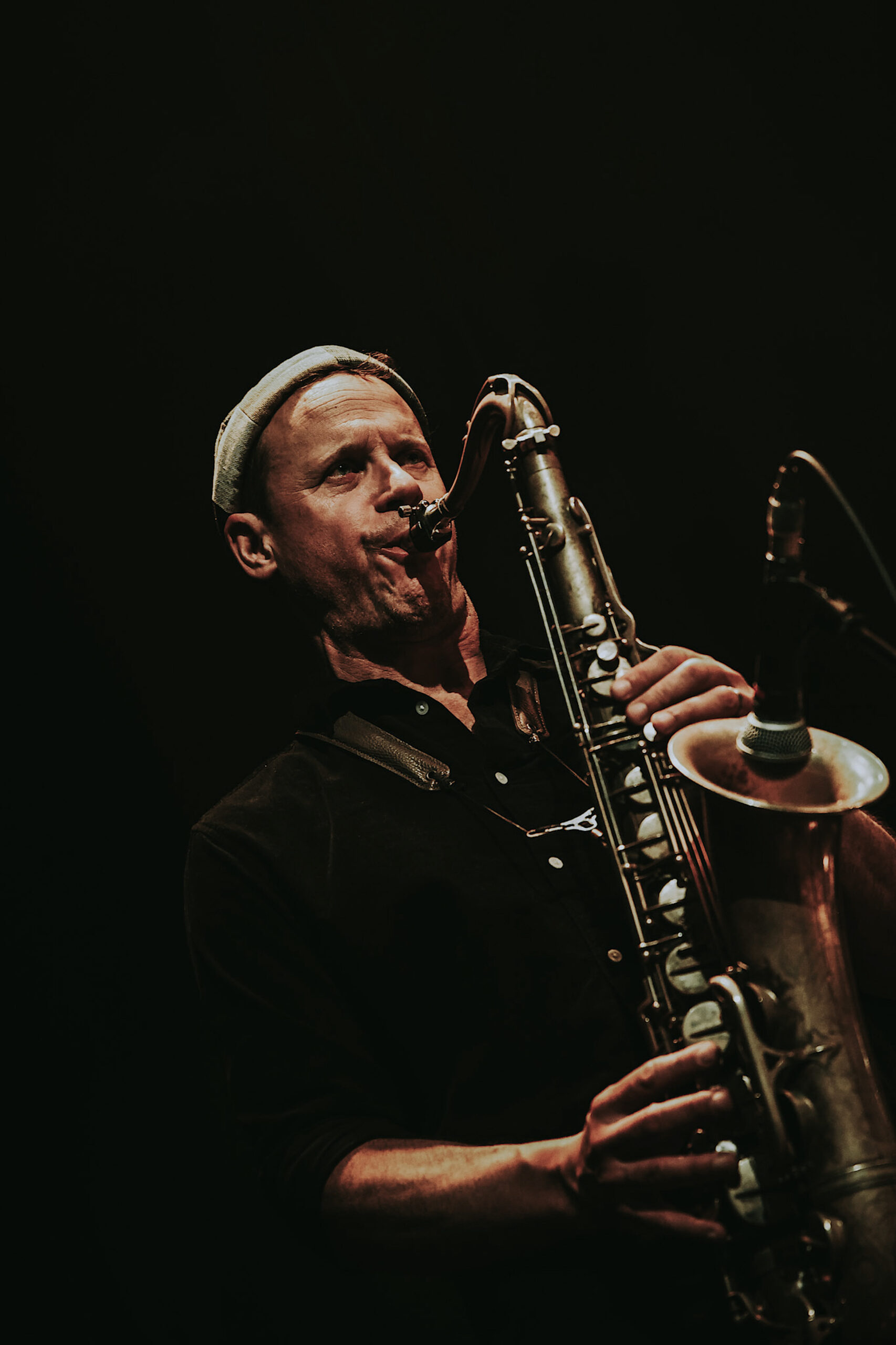
Frank Walden reflects on legacy and rediscovery with his debut solo album Objets Trouvés, shaped by years alongside iconic artists, personal growth, and a desire to leave something lasting for his children.
1. After years of touring with iconic artists, what finally made this the right moment to release your debut solo album Objets Trouvés?
A couple of months before the birth of my son in 2018, it suddenly struck me that if I wanted to make a record of my own, I’d better crack on and do it before life changed for ever, and the time and energy to do it would be radically curtailed! I pushed hard to make it
happen, but couldn’t quite find a date to get the musicians I wanted into the studio in the time available. Seven years later, my two kids were starting to explore my record collection one afternoon, pulling vinyl out of sleeves and putting it on the turntable, and it hit me that after all these years in music, it’d be nice if there were a record cover with my name and face on for my kids to listen to!
2. Just Friends reimagines an Amy Winehouse song as an instrumental jazz piece. What drew you to this particular track as your first single?
I always liked the chord sequence of ‘Just Friends’ when we used to play it with Amy, and the special quality of rapturous delirium of the song, the tender resignation of the lyric. It kept coming to mind when I thought of material for the album.
3. You worked closely with Amy from Back to Black until the end of her life. How did that experience shape you musically and emotionally as an artist?
I remember first getting the call to join her band. I went out and bought myself a copy of Back to Black, which had just come out. I put it on the CD player when I got home and within the first eight bars I thought, ’This is something special.’ Amy was younger than me, but I learnt a lot from her about musical integrity – and personal integrity. If anything it was personal integrity that brought her down. She was just never going to accommodate the bullshit that the industry swamped her with, and the only alternative she found was self-sabotage. I also made some very close friends in the band, and it’s been very special to tour again with those guys these past couple of years (as ’The Amy Winehouse Band’) and see audiences of teenage kids who were barely born when she died, and who know every lyric, every vocal inflection. Amy’s music continues to communicate to new generations.
4. In translating a vocal song so closely tied to Amy’s voice into a sax-led instrumental, how did you approach preserving its soul while making it your own?
Good question! It took me a while to find a way of keeping the song’s essence (I hope) while getting away from the psychedelic reggae of the original. It was listening closely to Amy’s vocal that offered me a way out – it’s so sinuous, so push-and-pull. She actually phrases consistently in triplets – which gave me the idea to go for the loose, swinging 12/8 feel characteristic of Elvin Jones, John Coltrane’s drummer.
5. The album title Objets Trouvés suggests found objects and rediscovered meaning. How does this concept reflect your journey and the music on the record?
Another great question! Making a debut album – ahem – a little later in life led to me conceiving of it as a kind of reflection on my musical journey so far. There is only one original on the record; the rest of the song choices consist of music that’s been a part of my career or my life somehow. It’s an eclectic bunch of songs, many of which were not ‘jazz’ originally. ‘Objets Trouvés’ is an art world term (besides its literal meaning of lost-and-found) referring to real-world objects incorporated into a work of art. It seemed an apt – if just possibly a little pretentious – title! The album cover is a collage of my face made up of hundreds of photos I’ve taken over the years on the road.
6. Having spent years supporting other artists on stage, how does stepping into the spotlight as a solo artist change your perspective on performance and storytelling?
One thing I would say is that over the years of being a sideman you absorb a lot – consciously and unconsciously – from bandleaders and artists you have worked for. And one benefit of age is that you feel that much less self-conscious. You have half an idea of where you stand, and what you have to give – in a way that earlier in your career, with the insecurities of youth, you perhaps wouldn’t.
Copyright © 2026 The Inteviewist