
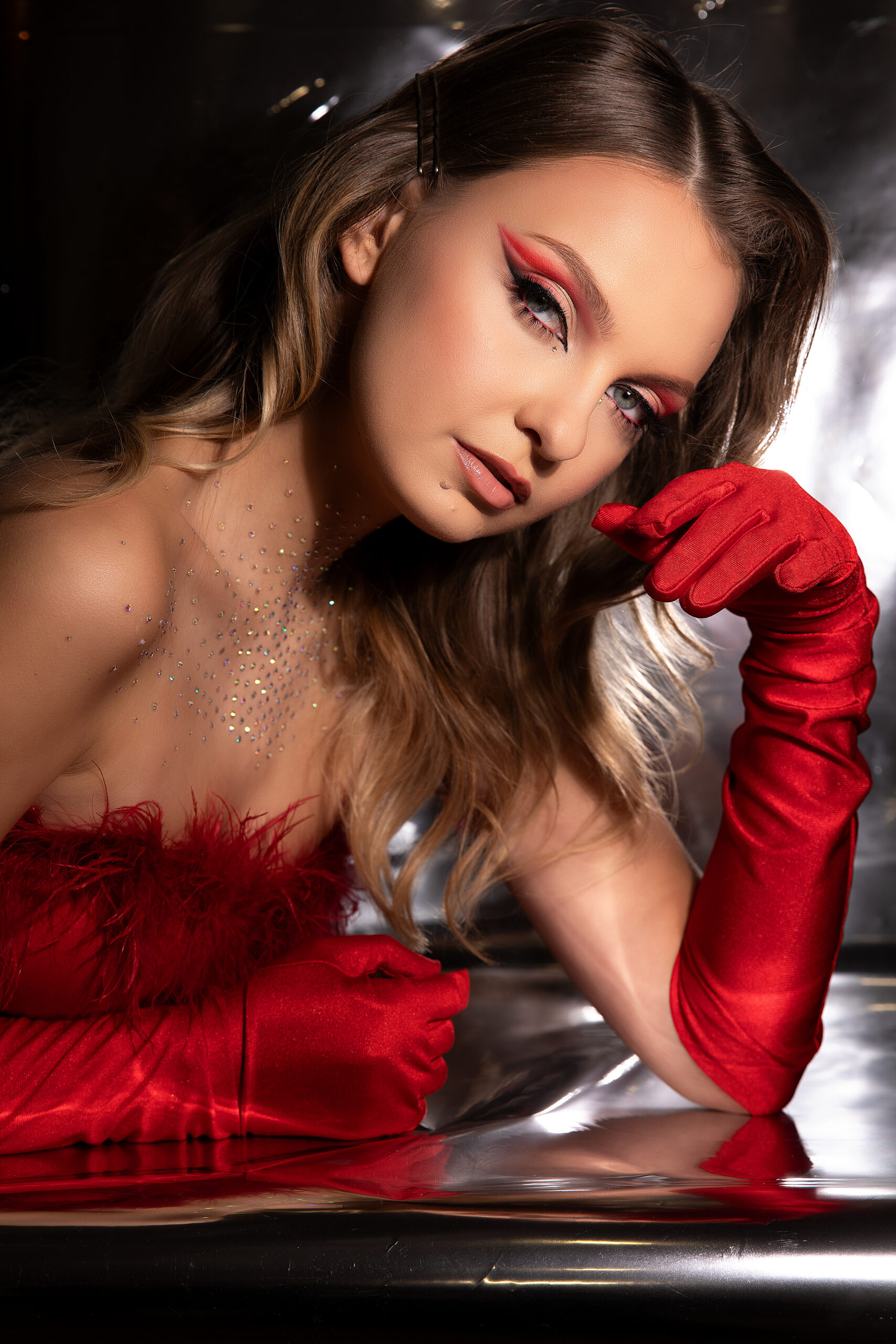
In this interview, Toma opens up about the emotional depths behind her debut “Vienišas,” exploring toxic love, atmospheric soundscapes, and the honest storytelling that shapes her evolving artistic identity.
1. “Vienišas” tells a dark, emotionally complex story about toxic love. What drew you to this narrative, and how did you translate those psychological themes into the song’s sound and atmosphere?
I would lie if I said that it was inspired by movies or books, as dark as it is, it’s truly my life experience. I went through a relationship that slowly stripped away parts of who I was, and for a long time I didn’t even realise how deeply it was affecting me.
When I started writing “Vienišas”, I wanted the sound itself to feel like that emotional descent — that soft beginning that would give a naive hope, the tension, the confusion, the bridge moment that is the sound of the deep pain. That’s why the song has this melancholic, alternative rock atmosphere. Heavy guitar textures mirror the psychological weight, and my vocal performance is intentionally spaced out, almost blended in some moments, that’s how thoughts inside were back then, cloudy, hazy, not clear.
For me, it wasn’t just about telling a story; it was about capturing the emotional truth of it. The song is my way of processing what happened and turning something painful into something meaningful.
2. Your music blends alternative pop/rock with cinematic depth. How do you approach building these immersive soundscapes, and what elements are essential for creating your signature melancholic tone?
I would have to correct you here – the “cinematic” part comes from the music video, not the song itself. And that vision existed long before the track was even written. From the very beginning, both Stephen and I imagined the same abandoned house; we could picture it almost identically in our minds before I even discovered it in real life.
I just knew it had to be this way. I wanted something high-quality, artistic, and meaningful, something with emotional depth and lasting value. People who have followed me for years know that whenever I’m past that forest road leading to my hometown, I always have to capture it. I want others to see it through my eyes, to feel how magical and special it is to me.
This time, I finally got to preserve that feeling in a permanent way. It’s there now – my home, my memories, my story woven into the visuals of this debut.
For me, melancholy in music isn’t something I try to “add” — it’s something that naturally comes out. I always start with emotion first. If I don’t feel something deeply, I can’t create anything meaningful.
Usually the melancholic tone comes from three things:
the chords, which I tend to choose darker or bittersweet;
the guitar textures, because I love when they feel slightly rough, nostalgic, or emotional;
and the vocals, which I intentionally keep spaced out or a little blended.
3. You’ve performed in both Lithuania and London for over a decade. How have these two music environments shaped your artistic identity and influenced your debut release?
There’s a whole story behind this, but I’ll try to fit it into one answer. I grew up listening to Miley Cyrus – she was my icon from a very young age, and pop music culture shaped me more than anything. That’s also the music I performed for many years in Lithuania. Later I studied jazz vocal; I only connected to small parts of it at the time, and honestly, the course was very intense and I was very young. I think I simply wasn’t ready to appreciate it fully yet.
When life brought me to London, everything about music suddenly became more complex. I met musicians from so many different backgrounds and cultures. We performed together, experimented, mixed genres, and even wrote music together – I still remember the Portuguese song we wrote and recorded. That period shaped me a lot. It was a difficult time in my life, but making music with those people genuinely kept me sane. It expanded my taste and made me understand music as something deeper, heavier, more meaningful.
To be honest, the writing session for “Vienišas” originally started with a more superficial pop sound. But I drifted away from it immediately. I had a story to tell, and that story needed weight. It had to sound like “Vienišas.”
4. Your background spans genres like soul, blues, jazz, and indie rock. How do these influences inform the way you write and perform emotionally driven songs?
Each genre I’ve touched taught me something different about emotion.
Soul showed me how to sing with honesty.
Blues taught me how to let pain live in the melody.
Jazz trained me to be expressive, flexible, not afraid of unexpected choices.
And indie rock brings the rawness and atmospheric tension that defines my current sound.
When I write now, all these influences blend naturally. I don’t think in genres anymore – I think in feelings, and I choose whatever sound helps express that emotion the best.
5. The music video for “Vienišas” adds a visual layer to the story. What message or feeling did you want viewers to take away from the cinematic portrayal of this relationship?
Going through all of this still feels like an emotional rollercoaster. It tells the story of a young, naive heart caught in a cruel, toxic relationship with someone struggling with psychological issues. Through an artistic, cinematic music video, the narrative of an unhappy love story hidden behind the lyrics is revealed, showing how another person’s inner darkness can irreversibly affect your own psychological state and identity.
And yesterday I found the most beautiful comment under the music video – a woman said that my song and the visuals instantly reminded her of a book she once read, and that if the book had a soundtrack, it would be “Vienišas.” You know the saying that a person who reads lives a thousand lifetimes, so I hope they can relive that story, in a way.
6. Your mission is to create music with lasting emotional value. What themes or stories do you hope to explore next as you continue developing your creative universe?
As painful as “Vienišas” was to write, it opened a door for me – a realization that honesty and stories I carry within me is my strongest artistic tool. So moving forward, I want to keep exploring themes that people often hide.
I’m drawn to stories that feel raw and human – the kind you don’t talk about easily, but you feel deeply. I want my future music to carry that same emotional weight, whether it’s about love or the fragile moments that shape who we become.
My mission is to create songs that stay with people long after they stop playing.
Copyright © 2026 The Inteviewist