
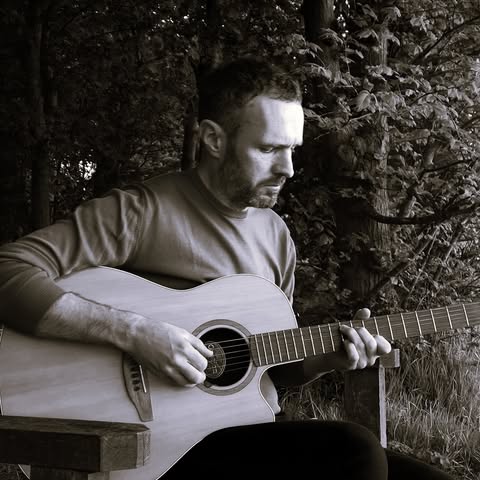
This interview with Joe Sensible explores the inspirations, creative process, and authentic songwriting behind his new EP, revealing how he balances personal expression, mood, and individuality in today’s music landscape.
I think everyone finds themself in that position at some point. When I wrote Don’t Say Goodbye I was feeling very positive about holding on in the relationship I was in.
To translate the emotion and positivity into sound, I added as much warmth to the mix as possible, especially with the acoustic guitar, vocals and cello. The uplifting piano took the longest time and I had to develop my skills to get the feel I wanted. I then layered on the retro soulful licks on the electric guitar to give the song a laid-back rock vibe.
If you create anything meaningful then it inevitably reflects different aspects of your personality. I think that when you start to deliberately focus on specific moods, there is a risk that your music can lose meaning. When I’m writing, I try to let the mood of the song take shape by itself. I have a calm and introspective side as well as a more complex and darker side. Both sides make an appearance on the album.
My first album was a set of ‘live’ recordings with just guitar and vocals. This E.P. has the same foundation but I wanted to do something much more musically immersive. The whole process taught me a great deal. I thought I had all my arrangements in place at the start of the project but I really didn’t give enough consideration to tone during the initial recording sessions. When it came to mixing I was continually revisiting issues in the arrangements that I had created during recording. In the future I will give pre-production a lot more time and respect.
It eventually became apparent that there wasn’t a wrong moment to release the music. These songs are as much part of me as the music I write now. I think I had something worth saying and it is still worth saying now.
A friend of mine once released an amazing piece of music and it was only streamed a few times. Nobody would add it playlists or give him airtime because it was different. He told me the biggest lesson to learn is that no-one cares. Ironically, I have found that liberating.
In the modern music industry, almost no-one cares about your music so there is really no point in making music for anyone else. Making formulaic music is straightforward so lots of people are doing it every day. However, you’re not doing anything meaningful, you’re making almost no money and what’s the point if you haven’t stayed true to yourself anyway? I would rather be genuine so whenever a listener connects with my music it is a real connection and it really means something to me.
I don’t really have any clear roots. When I was learning guitar I listened to everything from heavy metal and blues to traditional folk music. I’ll never stop loving the artists that inspired me but I don’t feel obliged to emulate their work.
I listen to a huge range of music but I have always been determined to do my own thing rather than sounding like anyone else. That is especially true of my songwriting. As soon as you start trying to copy someone else’s songwriting style, you start singing songs that sound like someone else wrote them.
If I’m writing a new song and it starts to remind me of someone else, I try changing something. If the song still sounds like something else I put it aside and forget about it.
Copyright © 2026 The Inteviewist